Clarity in Gemstones: The Hidden Factor That Can Change Price Overnight
When people think about gemstone value, colour usually comes first. But there is another powerful factor that can dramatically change the price of a stone, sometimes turning a cheap gem into a high-value treasure. That factor is clarity.
Clarity is not just about how clean a gemstone looks. It controls how light moves inside the stone, how much brilliance you see, and even how strong the gem is. Two gemstones with the same colour can have completely different prices simply because of clarity. This guide explains clarity in simple terms so you can understand it easily and make smarter buying decisions.
What Is Gemstone Clarity
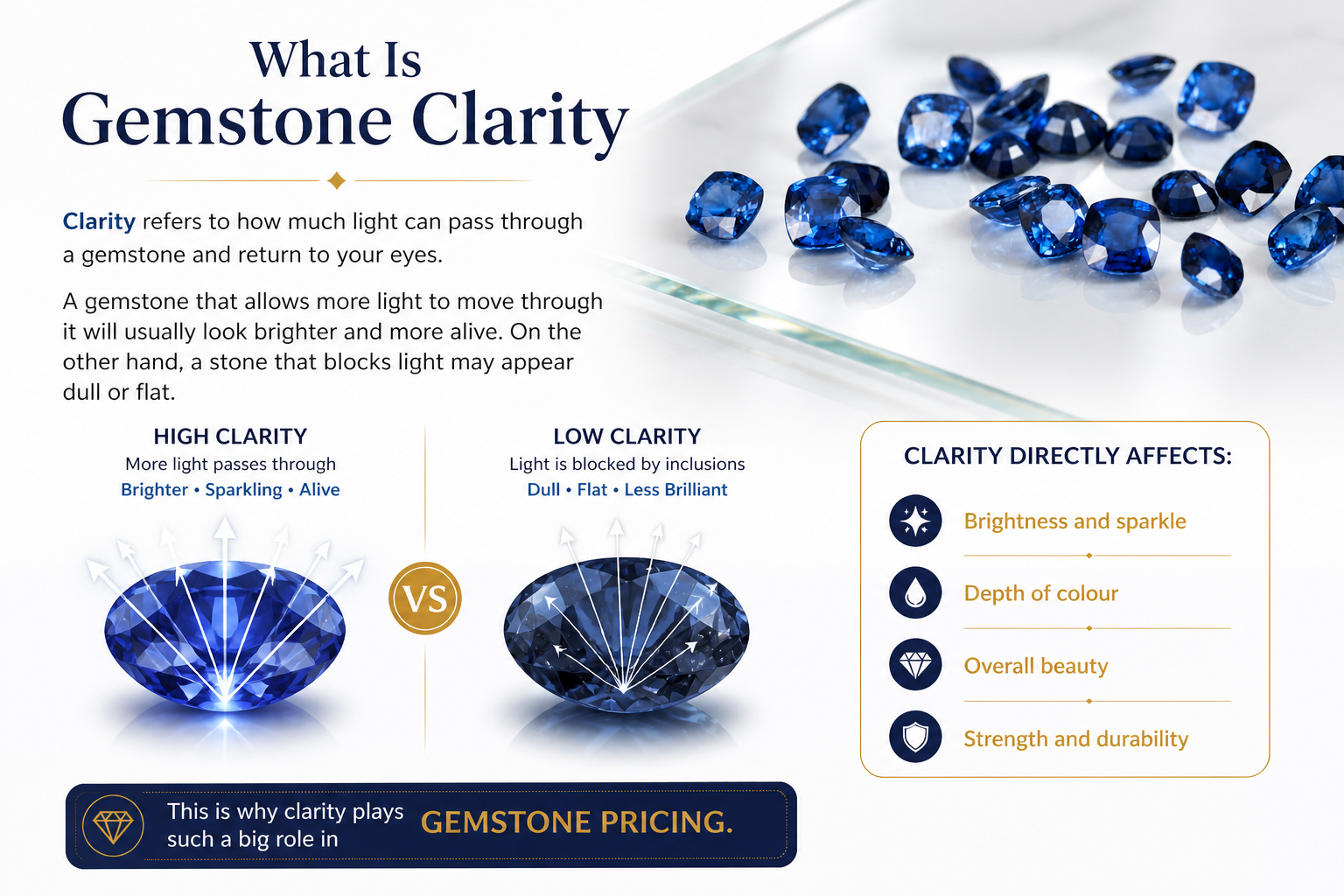
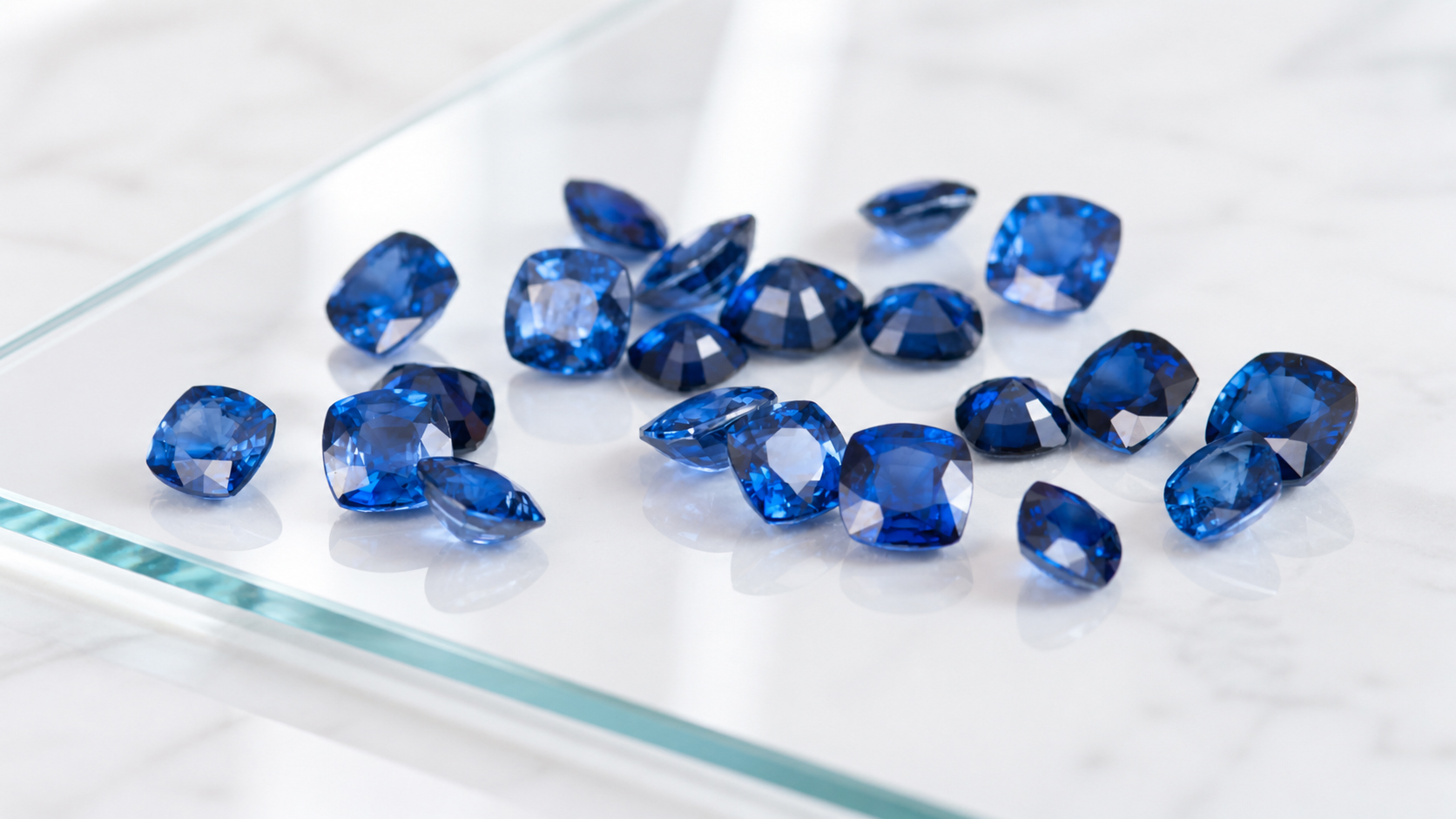
Clarity refers to how much light can pass through a gemstone and return to your eyes.
A gemstone that allows more light to move through it will usually look brighter and more alive. On the other hand, a stone that blocks light may appear dull or flat.
Clarity directly affects:
- Brightness and sparkle
- Depth of colour
- Overall beauty
- Strength and durability
This is why clarity plays such a big role in gemstone pricing.
The Three Main Types of Clarity
Gemstones are generally grouped into three main clarity categories. Understanding these is the first step to evaluating any stone.
1. Transparent Gemstones
Transparent stones allow light to pass through clearly. You can see objects or text through them.
These stones usually look bright, clean, and full of life.
Examples include:
- High-quality sapphires
- Quartz
- Kunzite
Why they are valuable:
- Maximum light return
- Strong brilliance
- High demand in jewellery
Transparent gemstones are typically the most expensive when all other factors are equal.
2. Translucent Gemstones
Translucent stones allow some light to pass through, but not clearly. You may see shadows or outlines, but not sharp details.
They often have a soft, glowing appearance rather than strong sparkle.
Examples include:
- Jade
- Some tourmalines
- Certain types of coral
Why they are valued:
- Unique glow instead of sparkle
- Attractive for carvings and cabochons
- Often used in artistic jewellery
These stones are usually priced in the middle range depending on quality.
3. Opaque Gemstones
Opaque gemstones do not allow light to pass through at all.
They have a solid appearance, and all the beauty comes from surface colour and patterns.
Examples include:
- Turquoise
- Lapis lazuli
Why they are valued:
- Strong, bold colour
- Unique patterns and textures
- Popular in traditional jewellery
Opaque stones are generally less expensive than transparent ones, but rare or high-quality pieces can still be valuable.
Sub Categories of Clarity
Not all gemstones fit perfectly into the three main categories. You may also come across:
- Semi transparent stones
- Semi translucent stones
These fall between the main levels and are very common in natural gems.
What are inclusions?
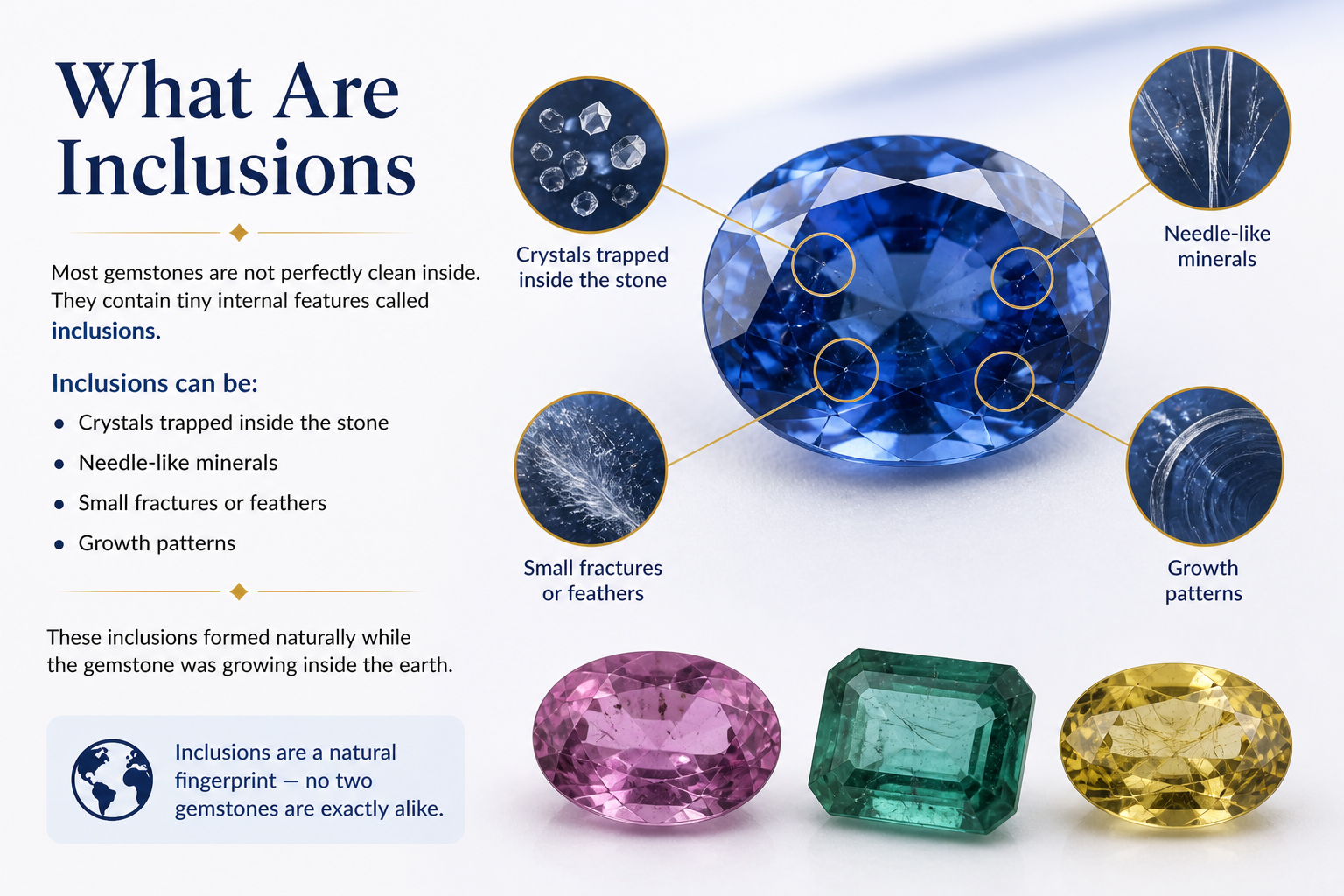
Most gemstones are not perfectly clean inside. They contain tiny internal features called inclusions.
Inclusions can be:
- Crystals trapped inside the stone
- Needle-like minerals
- Small fractures or feathers
- Growth patterns
These inclusions formed naturally while the gemstone was growing inside the earth.
How Inclusions Affect Price
1. Impact on Beauty
Inclusions can reduce beauty if they:
- Make the stone look cloudy
- Block light from passing through
- Create dark or visible spots
However, not all inclusions are bad.
Some inclusions can actually improve the appearance. For example:
- Rutile needles can create a star effect in sapphires
- Certain patterns can make a gem unique and interesting
A gemstone with attractive inclusions can sometimes be more valuable than a perfectly clean but boring stone.
2. Impact on Durability
Some inclusions weaken a gemstone.
For example:
- Cracks or fractures can make the stone fragile
- Pressure during setting can cause breakage
- Daily wear may worsen the damage
These types of inclusions reduce value because they increase risk.
How to Check Clarity When Buying
You do not need expensive tools to check clarity. A few simple techniques can help you evaluate a gemstone.
Use Light
- Check from different angles
- Look for internal marks or cloudy areas
Try the Text Test
- Place the gemstone over printed text
- If you can clearly read through it, it is likely transparent
- If you only see shadows, it is translucent
Look Closely
- Watch for cracks or lines
- Check for dark spots or uneven areas
- Notice how evenly light spreads inside the stone
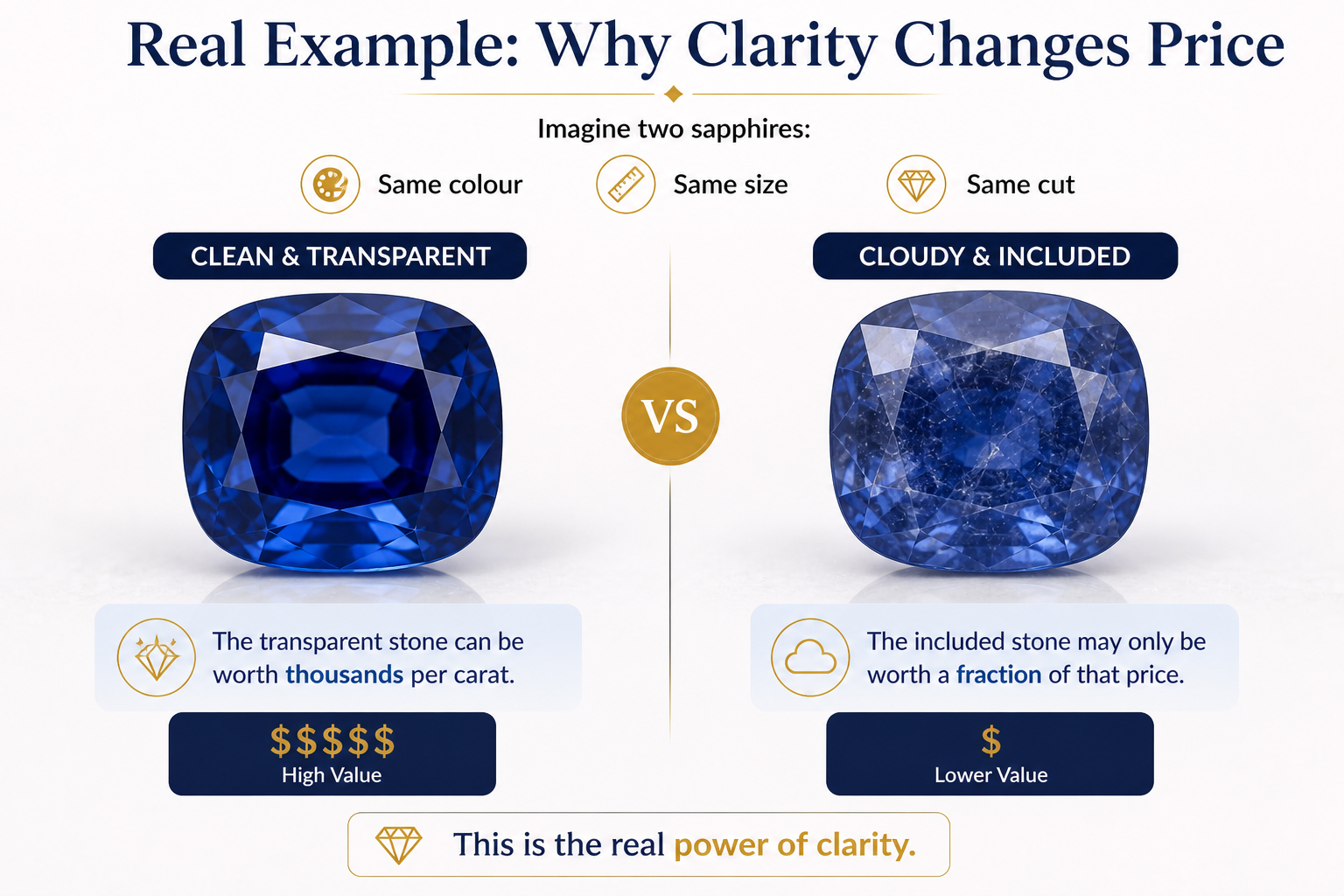
Real Example: Why Clarity Changes Price
Imagine two sapphires:
- Same colour
- Same size
- Same cut
But one is clean and transparent, while the other is cloudy with visible inclusions.
The transparent stone can be worth thousands per carat, while the included stone may only be worth a fraction of that price.
This is the real power of clarity.
Clarity Depends on Gem Type
Not all gemstones are judged the same way.
Some stones are expected to be clean:
- Sapphire
- Ruby
Others naturally contain inclusions:
- Emerald
- Tourmaline
And some are always opaque:
- Turquoise
The key rule is simple:
A gemstone is more valuable when its clarity is better than what is normally expected for that type.
Important Tip for Beginners
Do not assume that all inclusions are bad.
Some gemstones become special because of their inclusions. Others lose value because of them.
The goal is to understand:
- Whether the inclusion affects beauty
- Whether it affects durability
- Whether it is normal for that gem
Clarity is one of the most important factors in gemstone pricing, yet many beginners ignore it.
A gemstone is not just about colour. It is about how light interacts with the stone, how clean it appears, and how strong it is.
When you understand clarity, you gain a major advantage as a buyer. You can avoid overpaying, spot better quality stones, and choose gems that truly stand out.
The next time you look at a gemstone, do not just admire the colour. Look inside it. That is where the real story and value are hidden.