
The Hidden Story of Iranian Turquoise: Secrets Behind the World’s Most Beautiful Blue Stone
Long before modern Iran existed, in the age of ancient kings and fire temples, people believed turquoise was born from the tears of the sun. As sunlight touched the waters of sacred lakes, it transformed into a soft blue gemstone that would become one of the most treasured stones in history.
This is not just a myth. It is the beginning of a story that still lives today.
Why Iranian Turquoise Is So Special
Turquoise from Iran, especially from the region of Nishapur, has been considered the finest in the world for centuries. Its deep, sky-like blue color is unmatched, and its history runs through empires, religions, and trade routes.
Even today, jewelers and collectors agree on one thing
Not all turquoise is equal
Iranian turquoise is known for its rich, uniform blue. It is less porous and more durable than stones from other countries. It often requires no artificial treatment to enhance its color
Other countries like the United States and China also produce turquoise, but their stones are often lighter and need chemical treatment to look similar.
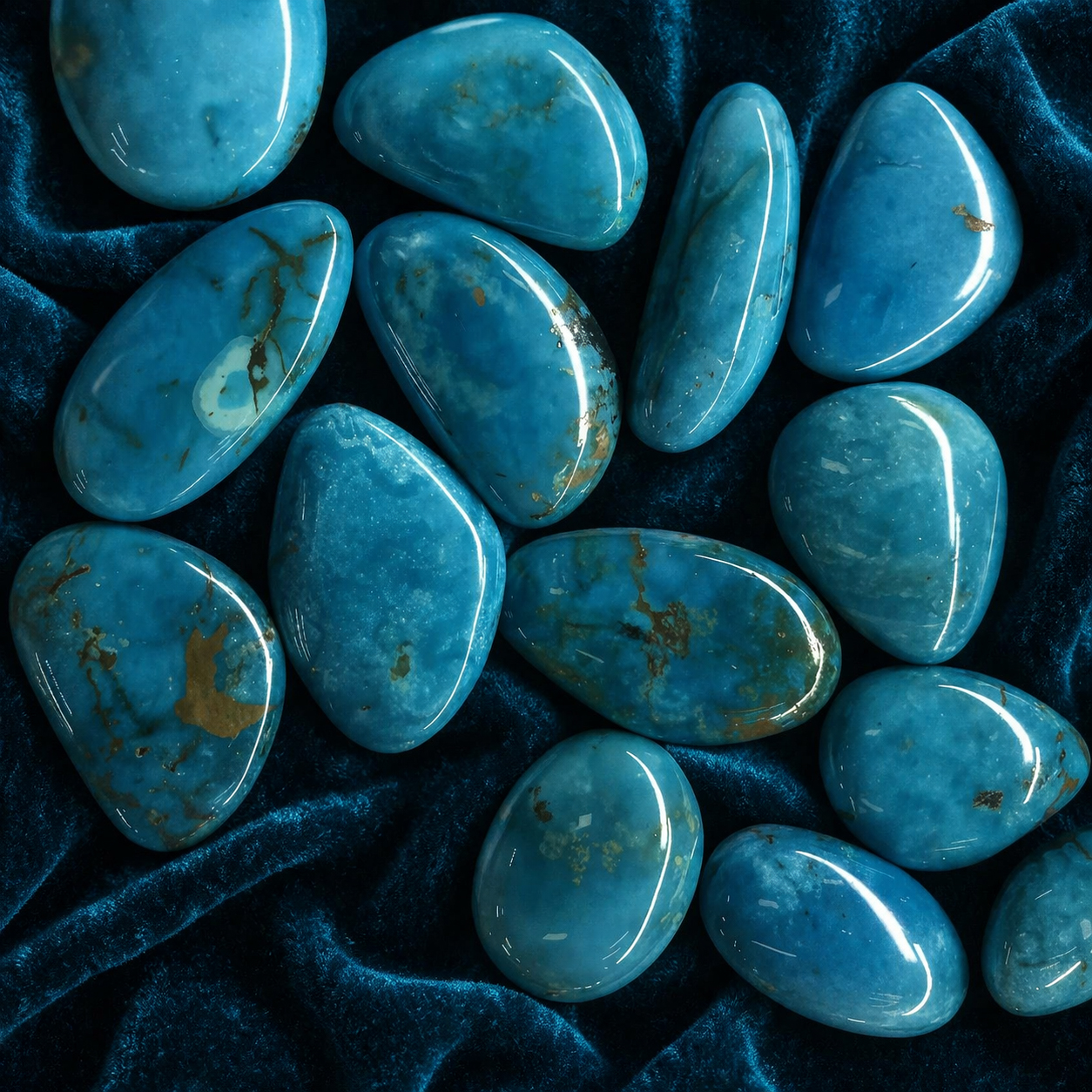
Inside the Secret Mines of Nishapur
The true source of this gemstone is hidden deep in the mountains near Nishapur. These mines are so protected that even many local jewelers have never seen them.
Turquoise forms over millions of years through a rare natural process:
- Rainwater seeps through rock layers
- It dissolves copper, aluminum, and phosphorus
- Under heat and pressure, these elements slowly form turquoise deposits
This process is incredibly slow, which makes high-quality stones rare.
Mining is tough and dangerous work. Workers spend long hours underground, using tools and controlled explosions to reach the blue veins hidden in rock. Safety is strict, and every stone is carefully collected and sorted.
From Rough Stone to Precious Jewelry
Once extracted, turquoise begins its transformation.
The process includes:
- Cutting away unwanted rock using diamond tools
- Shaping the stone into a smooth, rounded form called cabochon
- Polishing it to achieve a soft, glossy finish
Unlike diamonds, turquoise is not faceted because it is opaque. Its beauty lies in its color, not its sparkle.
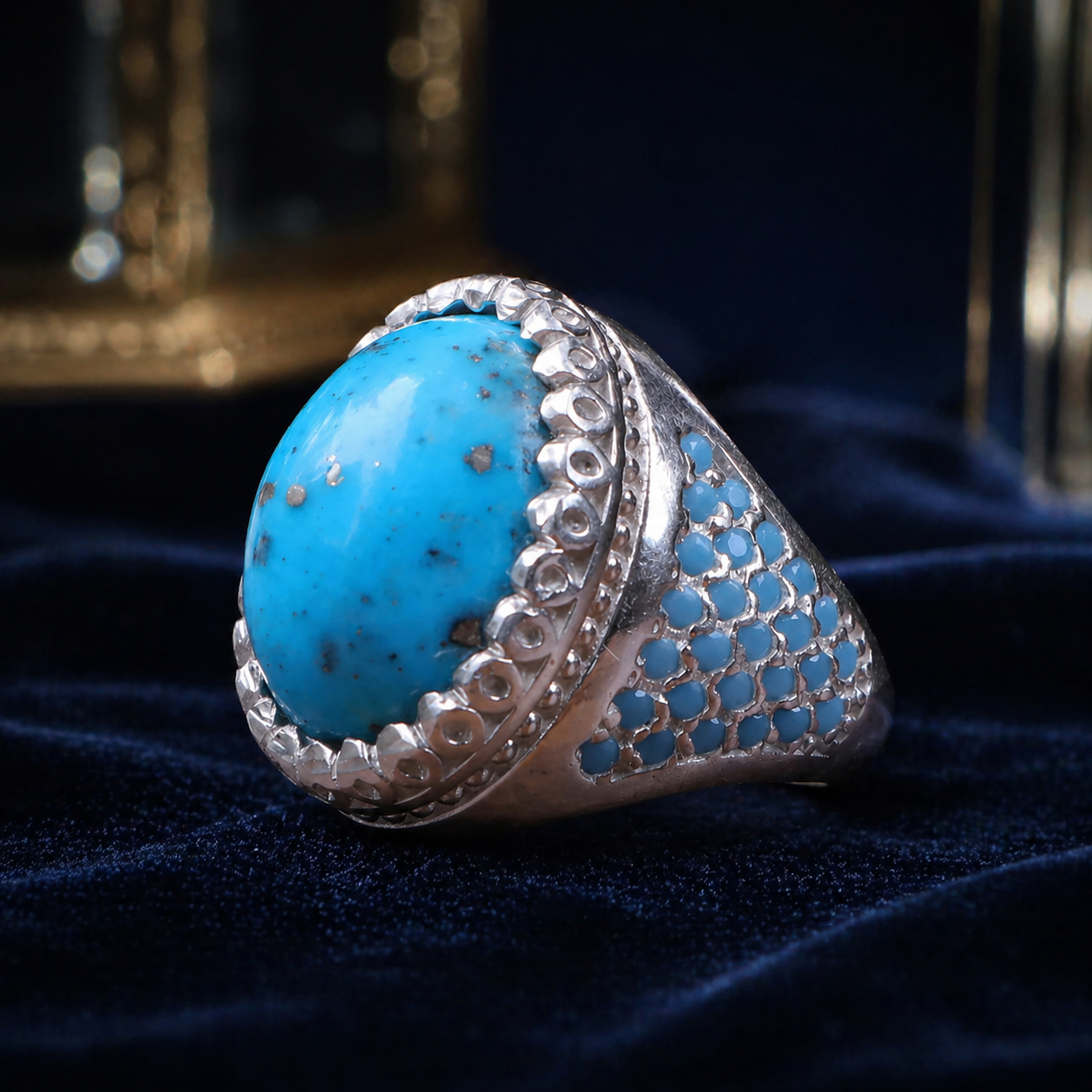
In Iranian bazaars, skilled artisans turn these stones into jewelry using traditional techniques passed down for generations. Silver is the most common metal, especially for men’s rings, as gold is often avoided for cultural and religious reasons.
The Deep Cultural Meaning of Turquoise
In Iran, turquoise is not just decoration. It carries powerful meaning. Many believe the stone offers:
1. Protection from the evil eye
2. Strength and good health
3.Spiritual benefits during prayer
It is especially popular among men, who often wear turquoise rings daily. Women also use it, sometimes sewing small stones into clothing for protection.
Ancient texts even claimed turquoise could heal snake bites or change color depending on the air and environment.
A Gem Loved by Kings and Empires
Turquoise has been part of Persian history for thousands of years.
- It was used in royal jewelry during the Achaemenid Empire
- Archaeologists have found turquoise in ancient tombs and treasures
- Persian kings decorated crowns, thrones, and even hookahs with it
One famous example is the Persian royal treasures, where turquoise stood alongside diamonds, rubies, and emeralds. Despite the rise and fall of empires, the stone remained a constant symbol of beauty and power.
The Modern Turquoise Trade
Today, turquoise is still a big part of Iran’s economy and culture.
Each month, stones from the mines are sold in auctions. Buyers come from across the country to compete for the best pieces. These stones then supply a large industry of cutters, polishers, and jewelers.
However, production has declined in recent years. To meet demand, traders now import turquoise from other countries, though it rarely matches the quality of Iranian stones.
Why Turquoise Still Captivates the World
There is something timeless about turquoise. Its color reminds people of the sky, peace, and something beyond the ordinary. From ancient legends to modern markets, its journey continues. And perhaps that old story still holds a little truth that some where between sunlight and earth, something magical is created.