
The Complete Guide to Gem and Crystal Cleaning
Covered
Soapy Water
Frequency
(Ultrasonic)
The Complete Guide to Gem & Crystal Cleaning
You have a beautiful collection of crystals and gemstones. But over time, fingerprints, dust, iron staining, and grime dull even the most spectacular specimens. The question every collector eventually asks is: how do you clean them properly without causing damage? The answer depends almost entirely on what you are cleaning — and the consequences of getting it wrong range from a mildly disappointing result to a permanently ruined stone.
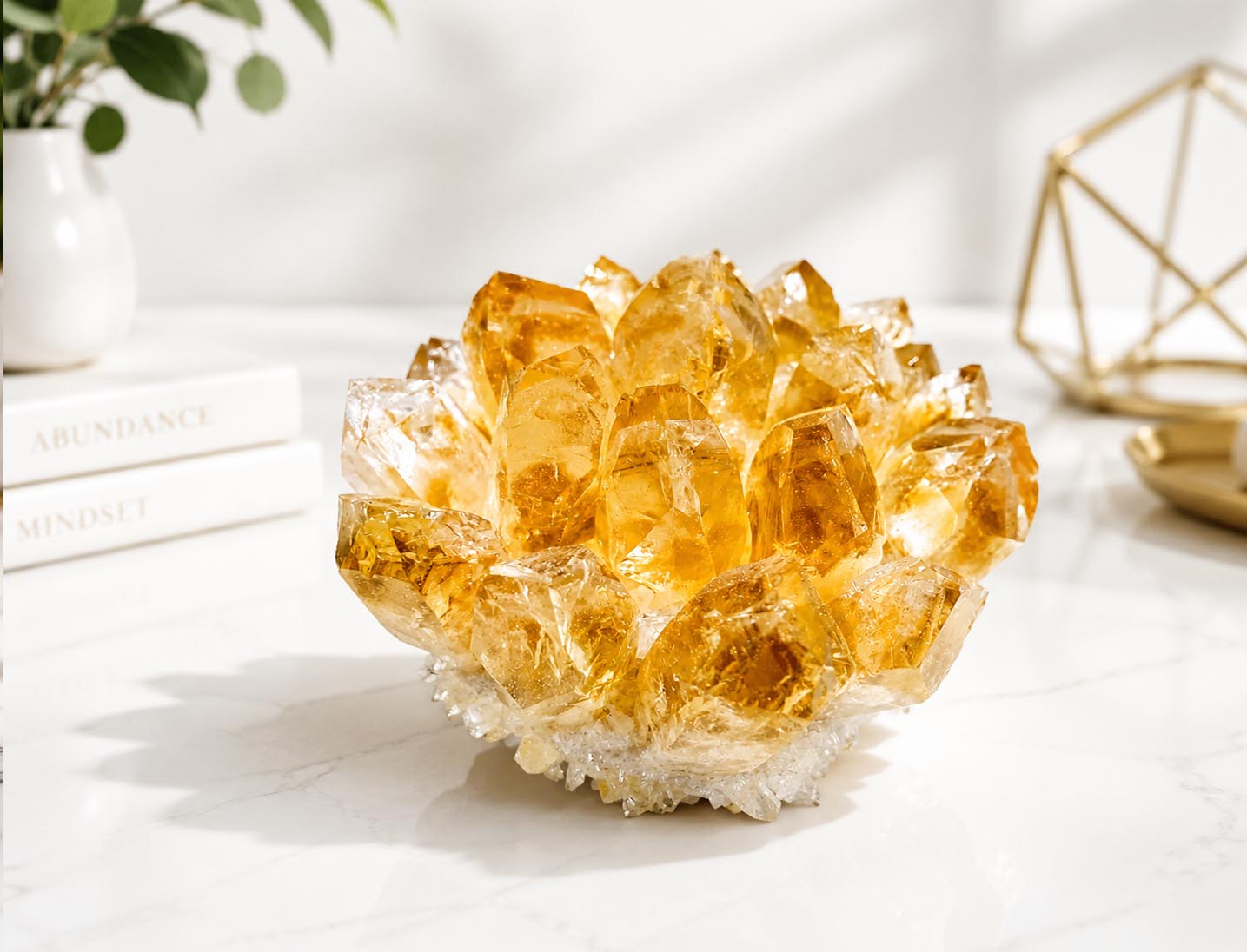
This guide covers every method from the gentlest to the most powerful, the stones that can handle each approach, and the ones you should absolutely never experiment on. Whether you are a seasoned mineral collector dealing with iron-stained quartz or a jewellery lover trying to restore a cloudy engagement ring, there is a right answer here for you.
The Golden Rule of Gemstone Cleaning
Before reaching for any specialist product, there is one principle that experienced collectors return to again and again: warm soapy water. It sounds almost too simple, but it is genuinely the safest and most effective starting point for the vast majority of mineral specimens and loose gemstones. Use a bowl of warm (not hot) water with a small amount of dish soap, and a soft brush to reach into crevices.
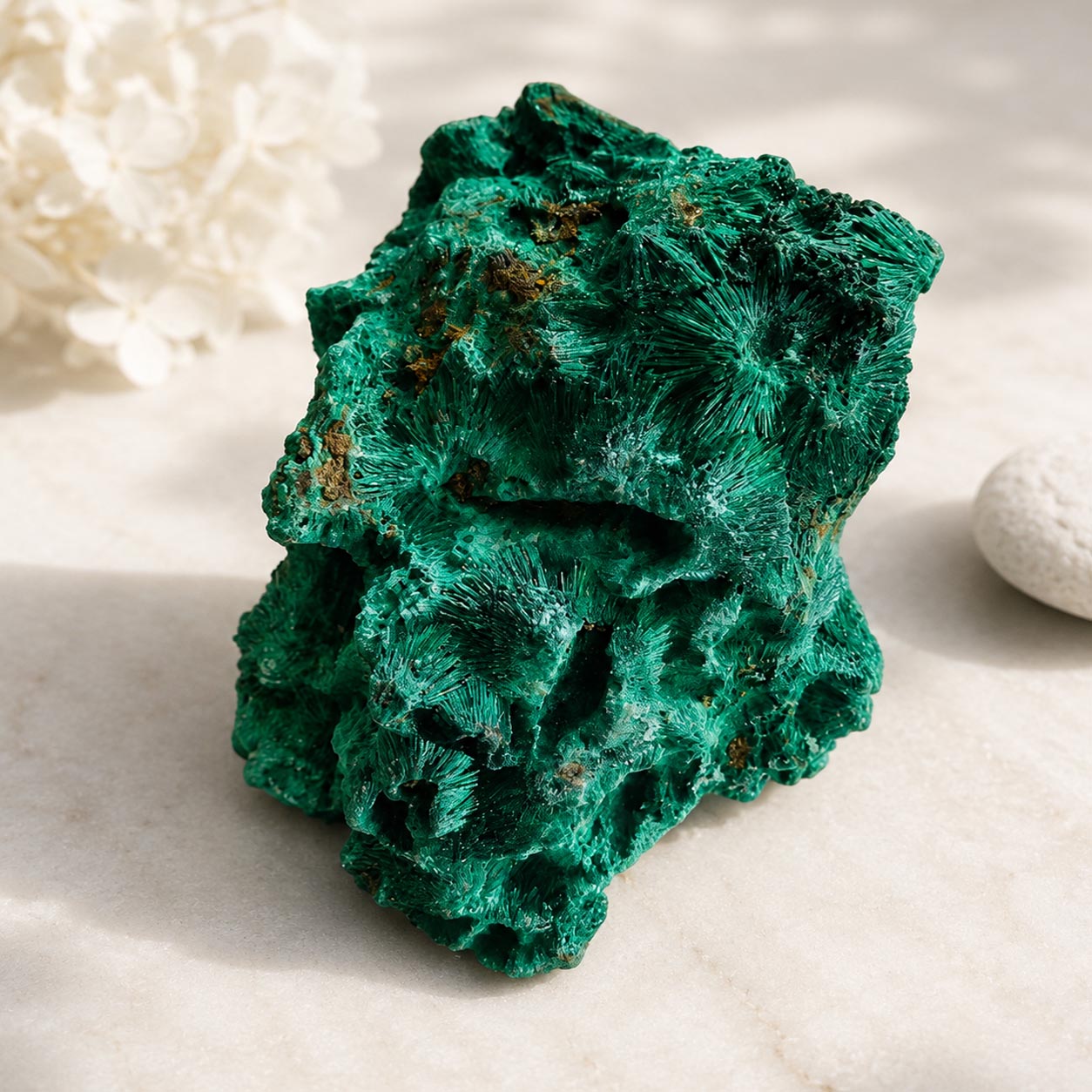
Fascinating Fact
Dish soap gentle enough for wildlife rescue operations is also gentle enough for your gemstone collection. The surfactants that cut through grease on plates do exactly the same job on oils and dust coating your crystals — without attacking the mineral surface beneath.
For deeply creviced specimens like Cactus Amethyst — which gets its name from its spiky, deeply ridged surface — a soft toothbrush or small art brush works wonders for working soapy water into tight gaps. The goal is to loosen trapped clay, silt, and surface grime without abrading the natural lustre of the crystal faces.
Understanding Gemstone Stability
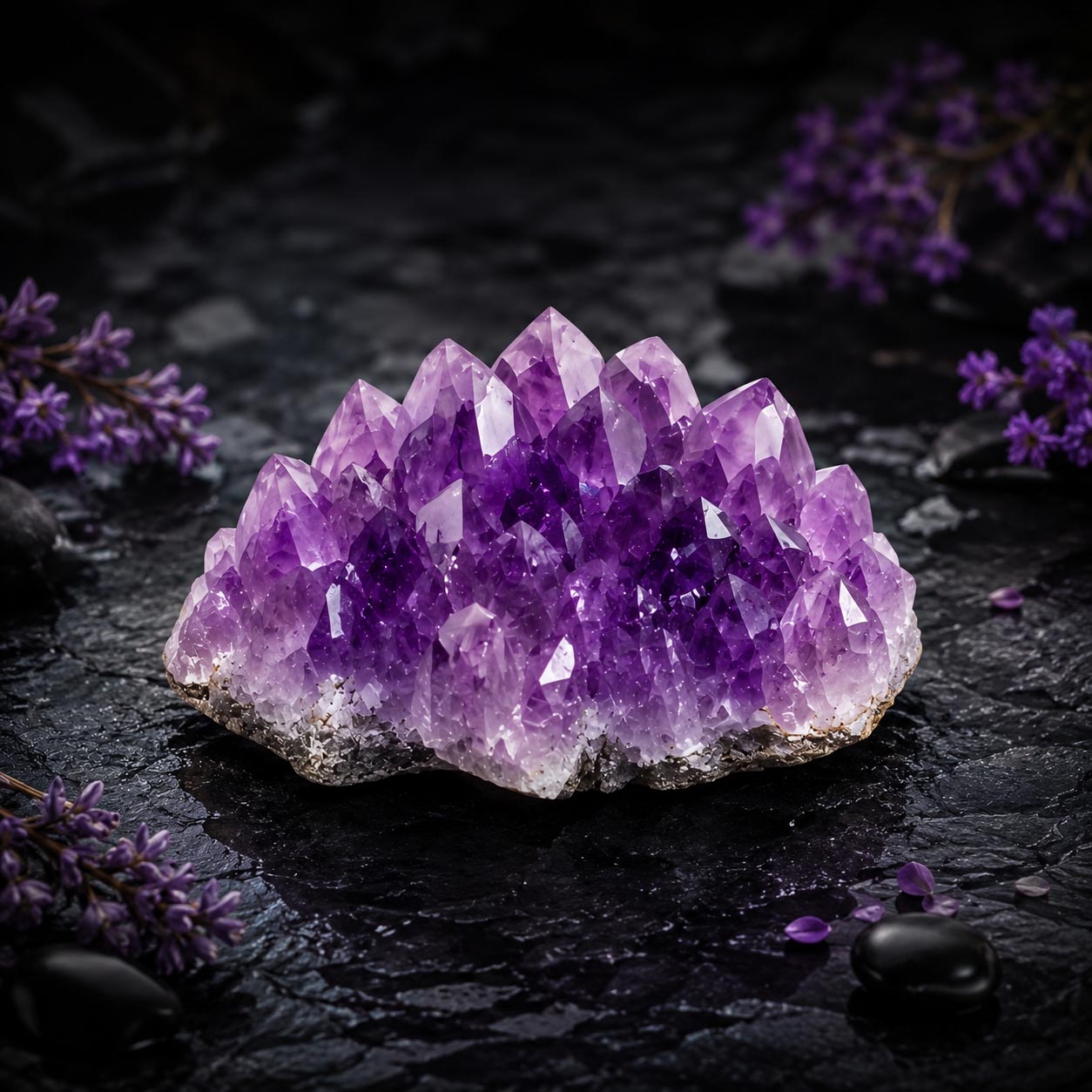
Not all gemstones are created equal when it comes to cleaning. Every gem has a property gemologists call stability — its susceptibility to damage from heat, light, and chemicals. Getting this wrong can permanently dull a stone’s surface, cloud a treated gem, or in extreme cases dissolve a mineral entirely. The table below covers the most common stones and how each responds to different cleaning approaches.
| Gemstone | Hardness (Mohs) | Warm Soapy Water | Ultrasonic | Chemical Cleaners |
|---|---|---|---|---|
| Quartz / Amethyst | 7 | Safe | Safe | With Caution |
| Peridot | 6.5–7 | Safe | Avoid | Avoid |
| Opal | 5.5–6.5 | With Caution | Avoid | Avoid |
| Turquoise | 5–6 | With Caution | Avoid | Avoid |
| Feldspar | 6–6.5 | Safe | Avoid | Avoid |
| Halite (Rock Salt) | 2–2.5 | Never | Never | Never |
| Mystic Topaz / Coated Gems | 8 | Safe | With Caution | Avoid |
| Rhodochrosite | 3.5–4 | With Caution | Avoid | Avoid |
Important Warning
Peridot — the beautiful green August birthstone — has notoriously low chemical stability. Strong detergents and almost all chemical cleaners can permanently dull its vitreous lustre. If peridot is in your collection, stick exclusively to warm soapy water and a soft cloth. No exceptions.
Cleaning Methods Explained
Each method below has a specific purpose and a specific set of stones it is appropriate for. Matching the method to the material is the core skill of safe gemstone maintenance.
Warm Soapy Water
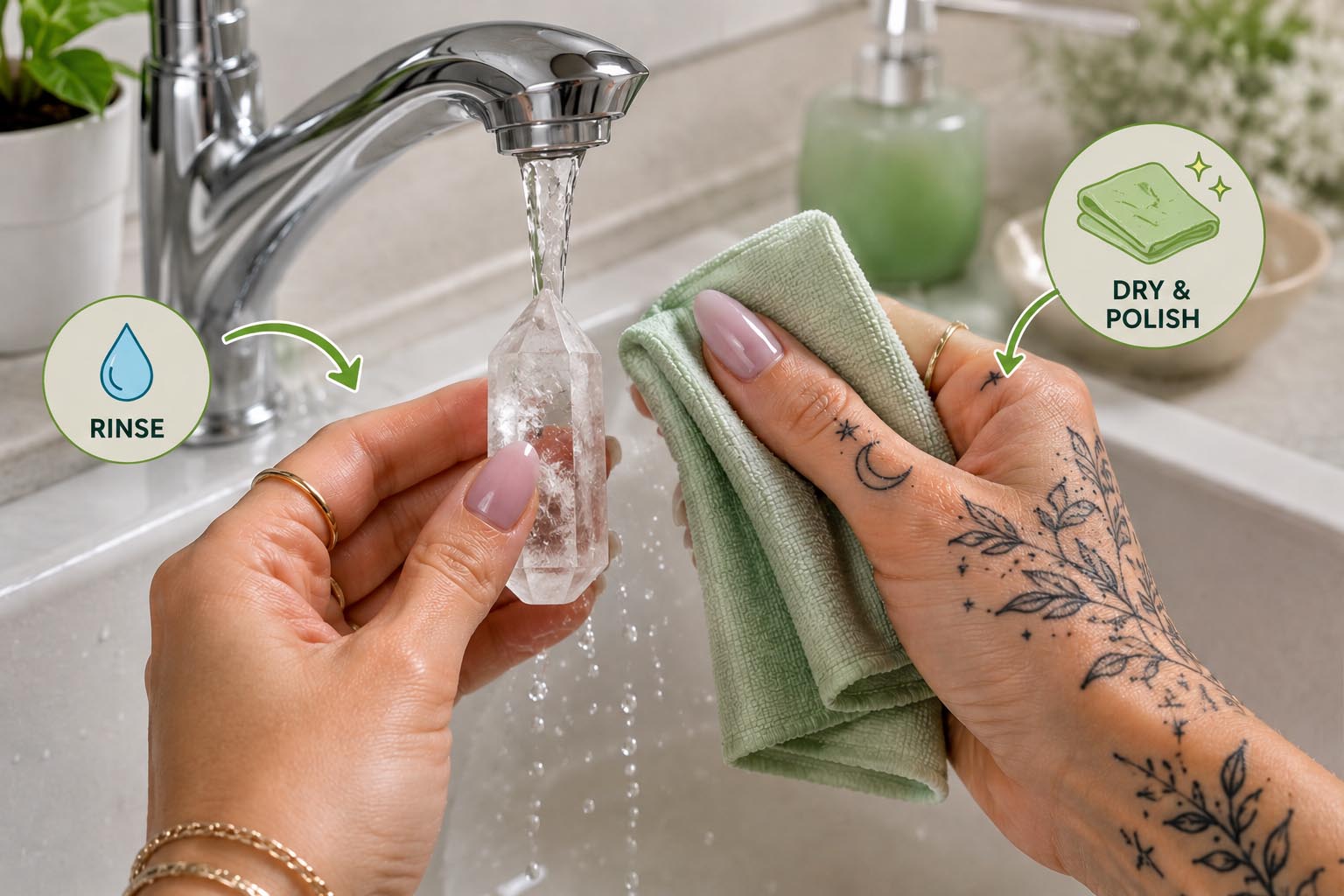
The universal starting point. Safe for almost all specimens, requires no special equipment, and causes no damage when used correctly. Use a bowl of lukewarm (never hot) water with a small amount of mild dish soap. Work a soft brush — a clean toothbrush or artist’s brush — over the surfaces and into crevices, then rinse thoroughly under clean running water. Pat dry with a soft lint-free cloth and allow to air dry fully before storage.
Sparkle Sticks & Cleaning Wipes
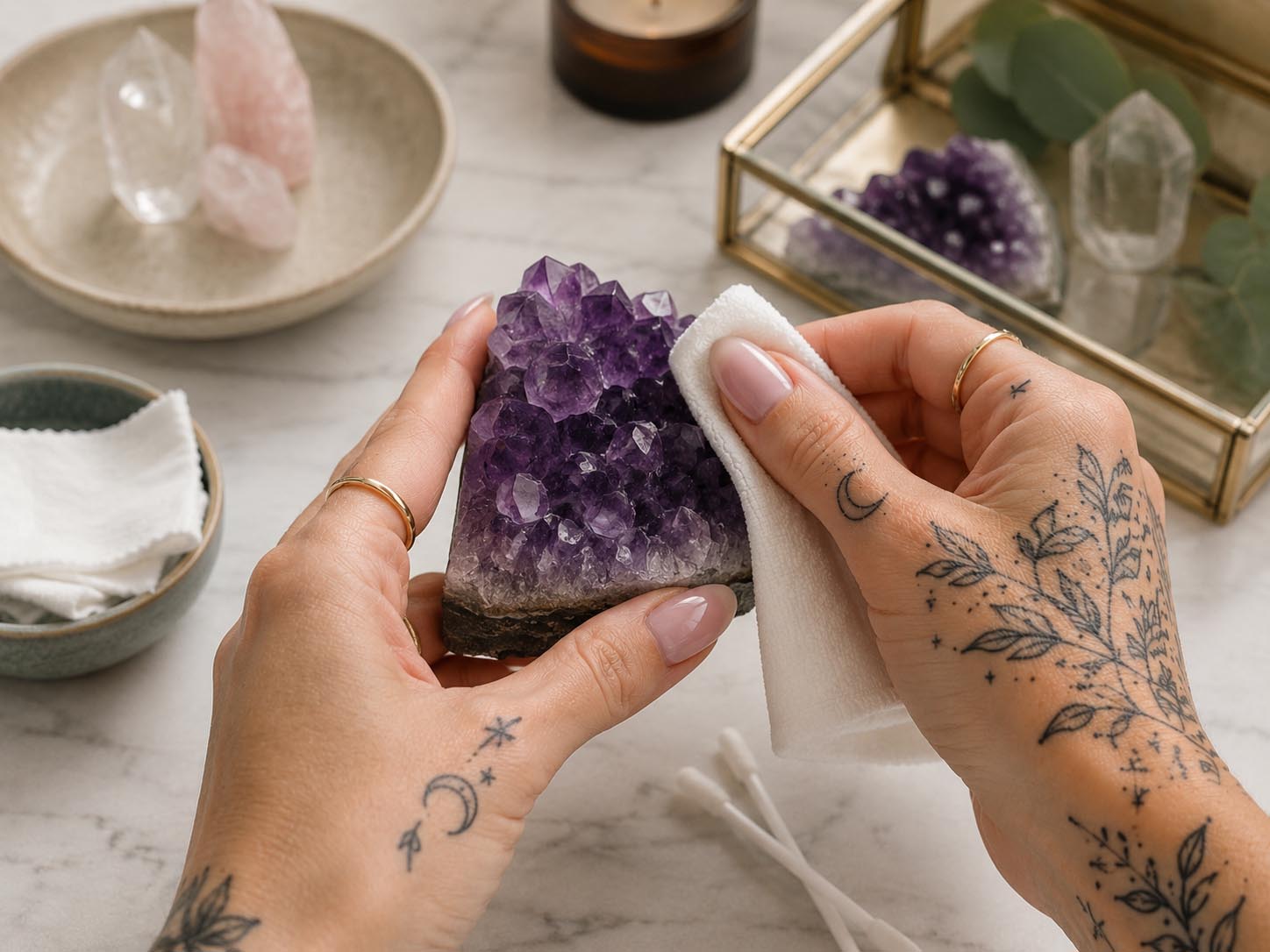
Pre-loaded cleaning wipes and sticks use gentle, natural-ingredient soap formulations and leave behind a fine shading agent that dramatically enhances lustre on cut stones and jewellery. They are particularly effective for loose gemstones and set pieces where you want a polished, showroom result without using a liquid bath.
Ultrasonic Cleaner
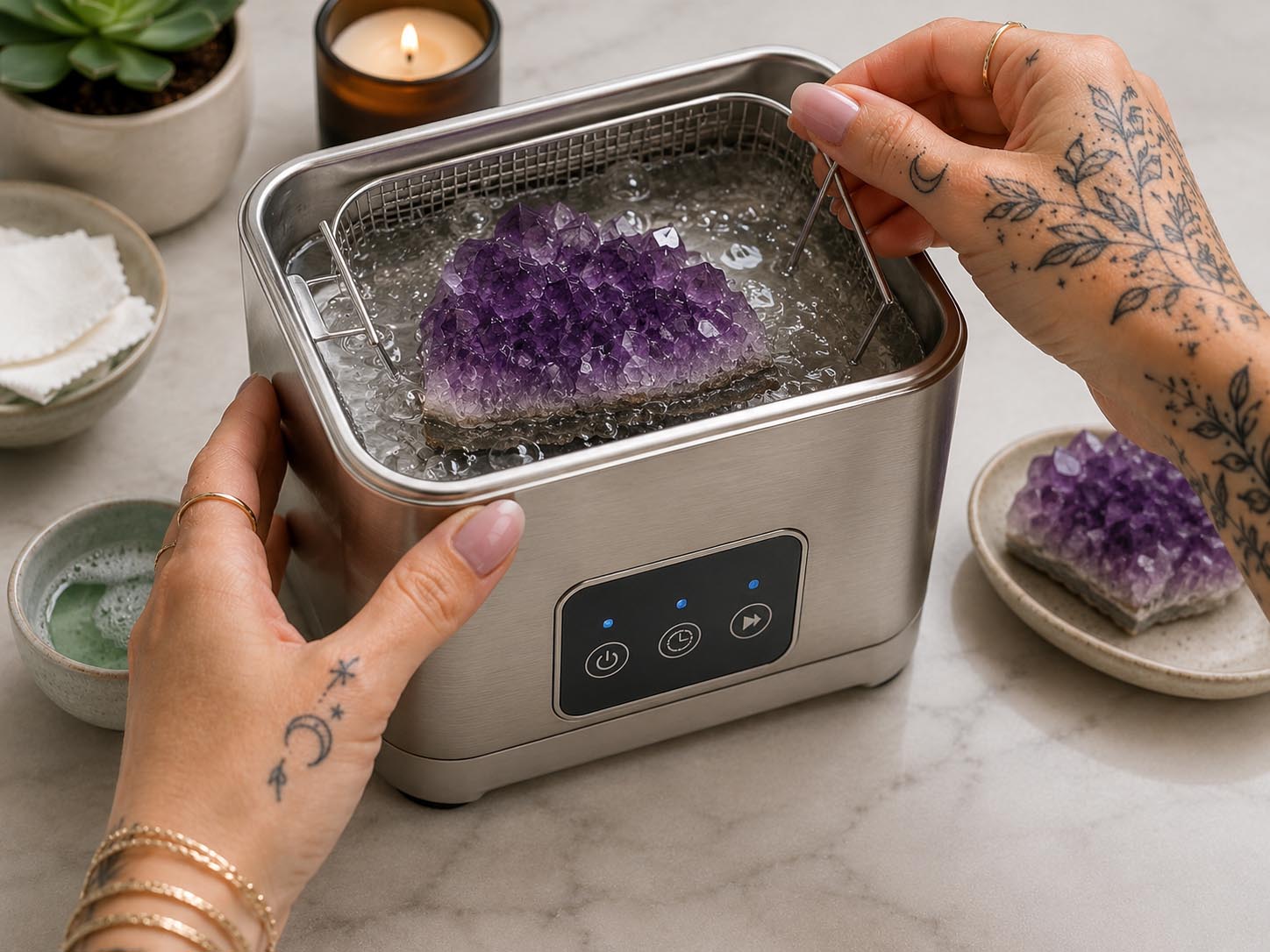
High-frequency sound waves — above 20,000 Hz — are sent through a water and soap solution, creating microscopic bubbles that implode and dislodge dirt from every surface, including the tight underside crevices of ring settings that a brush simply cannot reach. Use one part specialist ultrasonic soap to ten parts water, and run the machine for three to five minutes. Not safe for soft, porous, or fractured stones.
Silver Polishing Cloth
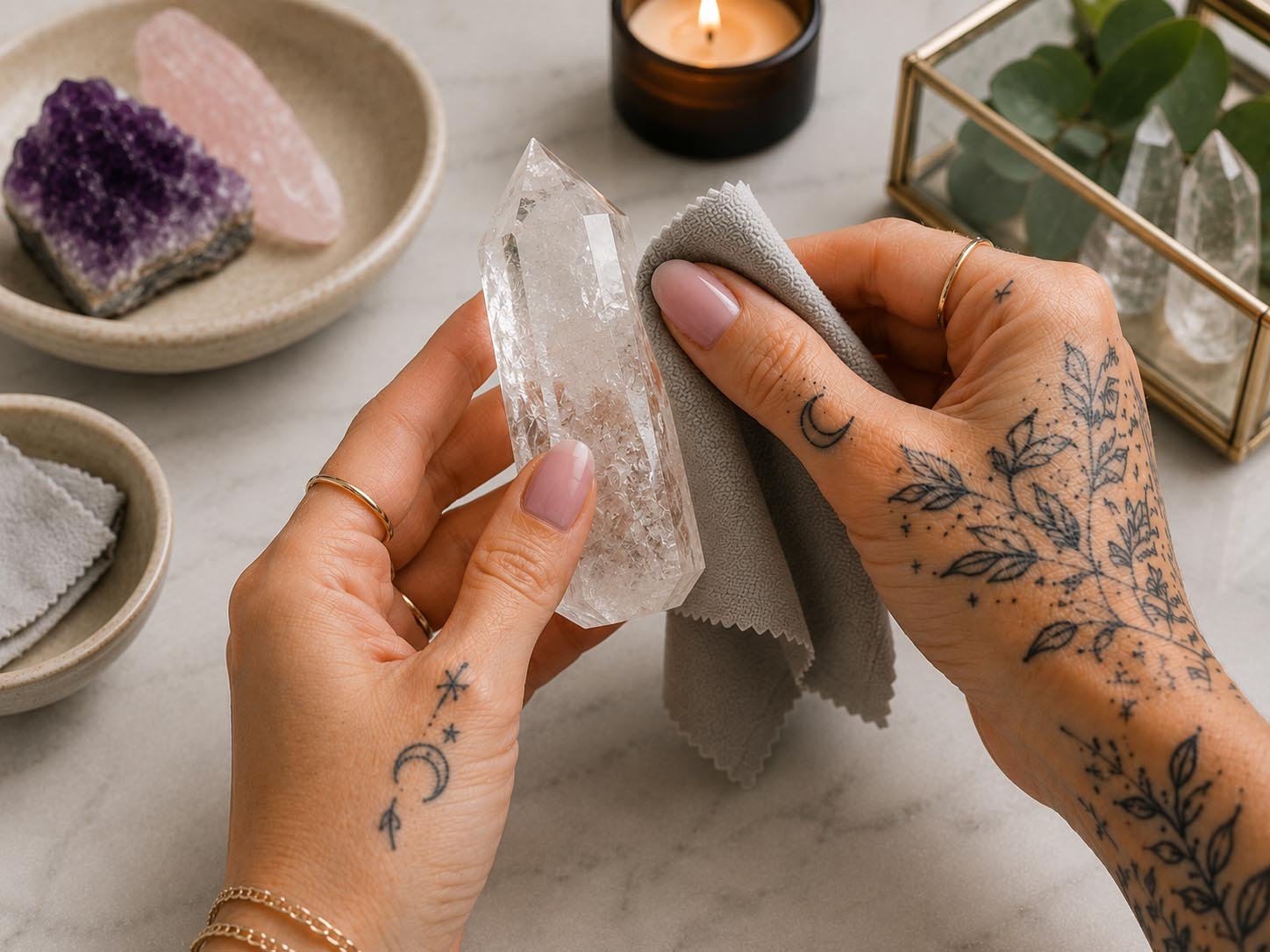
Silver tarnishes through a slow chemical reaction between the metal and sulphur compounds in the air. The fix is almost instant. A specialist silver polishing cloth removes the dark oxidised layer within seconds of contact. No liquids, no soaking, no risk to set stones. Polish only half a tarnished piece first — the contrast is genuinely startling, and a good reminder of how regularly silver jewellery benefits from attention.
Iron Out Solution (Quartz Only)
For persistent yellow or orange iron staining on quartz specimens — the type that warm soapy water cannot shift because iron oxide has actually bonded to the crystal surface. Mix the solution with water in a large container outdoors, wear a protective mask, and do not breathe the fumes. Soak the specimen for several hours to several days depending on the severity of the staining. Crucially, neutralise the remaining liquid with baking soda before disposal. This method is safe only for quartz (Mohs 7) and other chemically stable, high-hardness specimens.
Steam Cleaner
Home steam cleaners can dislodge loosened dirt from crevices that the ultrasonic has already worked on, giving a final flush to ring settings and mineral specimens. Effective for durable, thermally stable stones. Strictly avoid on opals, turquoise, any coated or treated gem, and anything with known fractures or inclusions that could expand under thermal stress.
“Matching the cleaning method to the stone is the whole game. Get it right and you restore a specimen to its natural best. Get it wrong and you have an expensive problem you cannot undo.”
Removing Iron Staining from Quartz
Iron staining — that yellow or orange rust-like discolouration — is one of the most common problems with quartz and amethyst specimens. It is not actually dirt sitting on the surface; it is iron oxide that has chemically bonded with the crystal face. Warm soapy water and standard cleaning will not touch it, which is why collectors reach for Iron Out.
The correct process: knock off any loose matrix or clay from the specimen first, mix Iron Out with water in a large outdoor container, submerge the specimen, and check every few hours. For heavy staining this can take up to 48 hours. Always work in an open, ventilated area, wear a mask, and neutralise every drop of the used solution with baking soda before it goes down any drain.
Cautionary Tale
One collector learned the hard way that natural iron staining can be what gives a stone its colour. After placing a golden-yellow “citrine” cactus quartz specimen into an Iron Out bath, the beautiful warm gold colour disappeared entirely — revealing the piece was actually natural iron-stained clear quartz, not citrine at all. Always identify your stone fully and understand its colouring mechanism before any deep cleaning treatment.
Ultrasonic Cleaners: What You Need to Know
Ultrasonic cleaners work by sending high-frequency sound waves through a water and soap solution. The waves create millions of microscopic cavitation bubbles that form and collapse at speed, and this action physically dislodges dirt and oils from every surface — including the tight nooks of ring settings that even the finest brush cannot reach. A cloudy, grimy ring can emerge looking genuinely brand new in three to five minutes.
Expert Insight
Watch a piece of jewellery in an ultrasonic cleaner and you will see clouds of mist billow out of the small spaces in ring settings — that is oils, skin cells, and fine particulate dust that has been trapped for years. Three to five minutes is sufficient for most moderately dirty pieces. Running the machine longer does not significantly improve the result on stubborn grime; a second pass after a gentle brush clean is more effective.
The critical limitation: ultrasonic cleaners are not safe for everything. The sonic vibrations can cause existing fractures inside a stone to propagate — widening and extending cracks that were technically stable beforehand. Soft stones, porous stones, doublets, triplets, and any fracture-filled gem should never be placed in an ultrasonic cleaner.
Do’s and Don’ts at a Glance
Always Do
Never Do
Did You Know?
The titanium coating on Mystic Topaz and Mystic Quartz that creates stunning rainbow iridescence is only a few microns thick — thinner than a human hair. Any abrasive cloth, rough brush, or strong chemical cleaner can physically scratch it away, leaving permanent dull streaks that cannot be repaired. These pieces deserve the gentlest possible treatment only, handled with clean hands and stored individually to prevent contact abrasion.
Silver Tarnish: The Simple Fix
Silver jewellery tarnishes through a chemical reaction between the silver surface and sulphur compounds in the air. It is a slow process — so gradual that many collectors simply get used to the duller colour over months without noticing how much the piece has changed. The fix, however, is almost instant.
A specialist silver polishing cloth removes the dark oxidised layer within seconds of contact. There is no soaking, no liquids, and no risk of harm to any gemstones set in the silver — provided you are not pressing hard against a soft or fragile stone. For delicate antique or heavily set pieces, an aluminium foil tray with hot water and dissolved baking soda offers a gentle electrochemical alternative that requires no physical polishing action at all.
“Try polishing only half of a tarnished silver ring before doing the rest. The contrast is genuinely startling — and a strong reminder of what your pieces looked like when they were new.”
Frequently Asked Questions
Can I clean all crystals the same way?
No. Every mineral has a different hardness, porosity, and chemical stability. What is perfectly safe for quartz may permanently ruin an opal or peridot. Always research your specific stone before applying any cleaning method beyond warm water and a gentle cloth.
Why does my quartz still look stained after washing?
If yellow or orange discolouration persists after soapy water, it is almost certainly iron staining — iron oxide that has bonded chemically to the crystal surface. This requires a targeted treatment such as Iron Out solution (for quartz only, outdoors, with full safety precautions) rather than standard surface cleaning.
Is it safe to put my engagement ring in an ultrasonic cleaner?
It depends entirely on the stone. Diamond, sapphire, and ruby rings are generally safe. Rings set with emeralds, opals, pearls, turquoise, or any fracture-filled or treated stone should never go in an ultrasonic cleaner. When in doubt, take it to a professional jeweller.
What should I do about rhodochrosite with manganese oxide coating?
Rhodochrosite is a soft stone at Mohs 3.5–4 and requires great care. A very soft brush with cool water and a tiny amount of mild soap is the safest approach. Avoid all acids, strong chemicals, and prolonged soaking. For a valuable specimen, a professional mineral conservator is genuinely worth consulting.
Why should I never use compressed air on gemstones?
Compressed air canisters release gas at very low temperature, causing rapid thermal shock to the stone surface. The sudden temperature differential can create or dramatically expand existing fractures, potentially splitting a gem that was structurally intact moments before. Always dry gemstones naturally or with a soft cloth — never with compressed air.
About the Author
Written by an experienced gem trader with hands-on experience across mineral collecting, specimen cleaning, and fine jewellery care. For more in-depth gemstone guides, explore GemGuidebook.com.
“Ethics and beauty go hand in hand. Discover Sri Lanka’s finest responsibly sourced gemstones at [Airagems.com].”
Let me know if you want a version