
Beryllium Diffusion in Sapphire: What Buyers Must Know
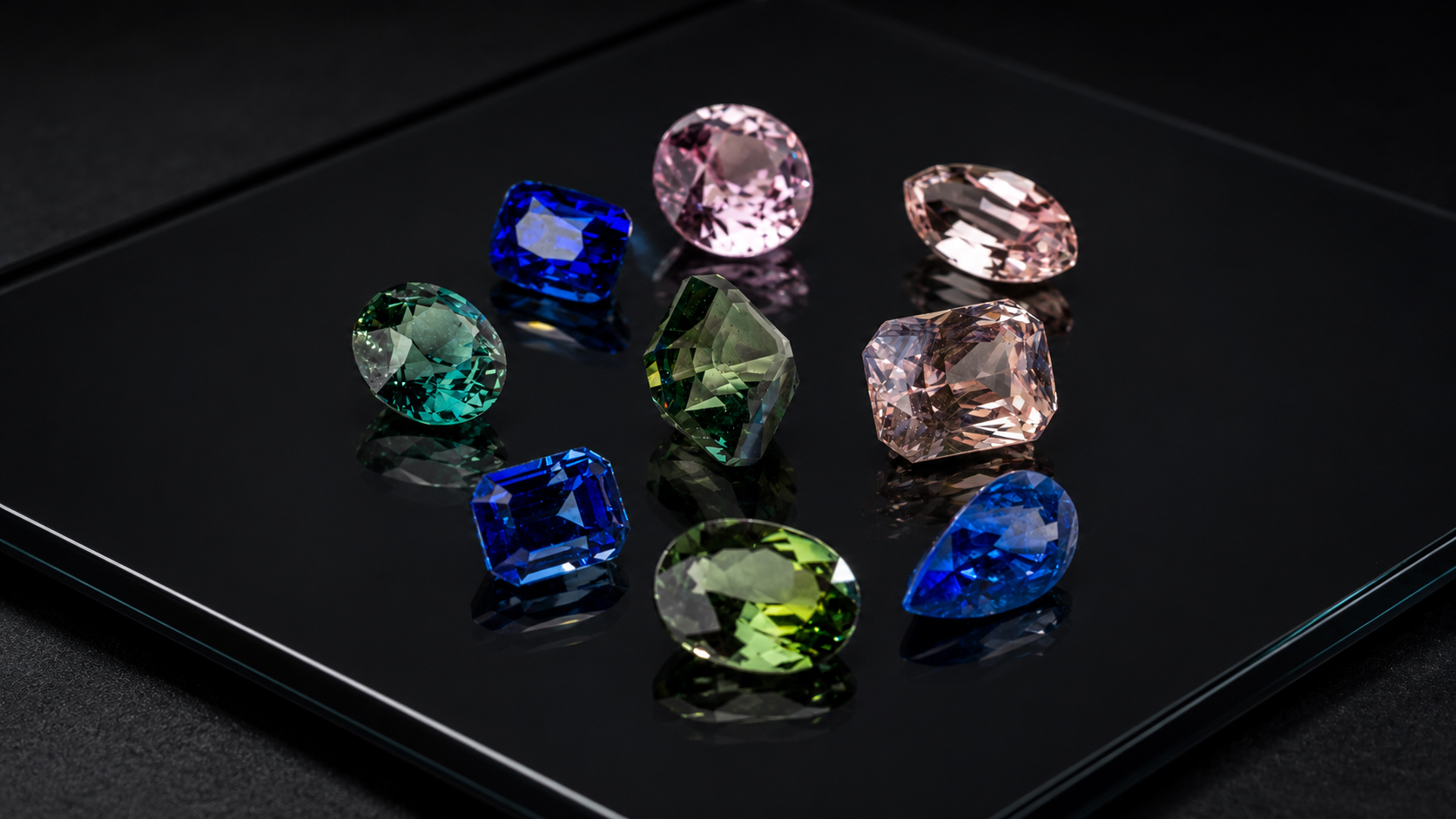
Sapphires are loved for their beautiful colours, but not every colour is natural. Some sapphires are treated to improve or completely change their appearance. One important treatment buyers should know about is beryllium diffusion. This treatment can create bright yellow, orange, pink-orange, red and even blue sapphires. Some of these stones look very attractive, but they are worth much less than natural untreated sapphires or standard heat-treated sapphires.
What Is Beryllium Diffusion?
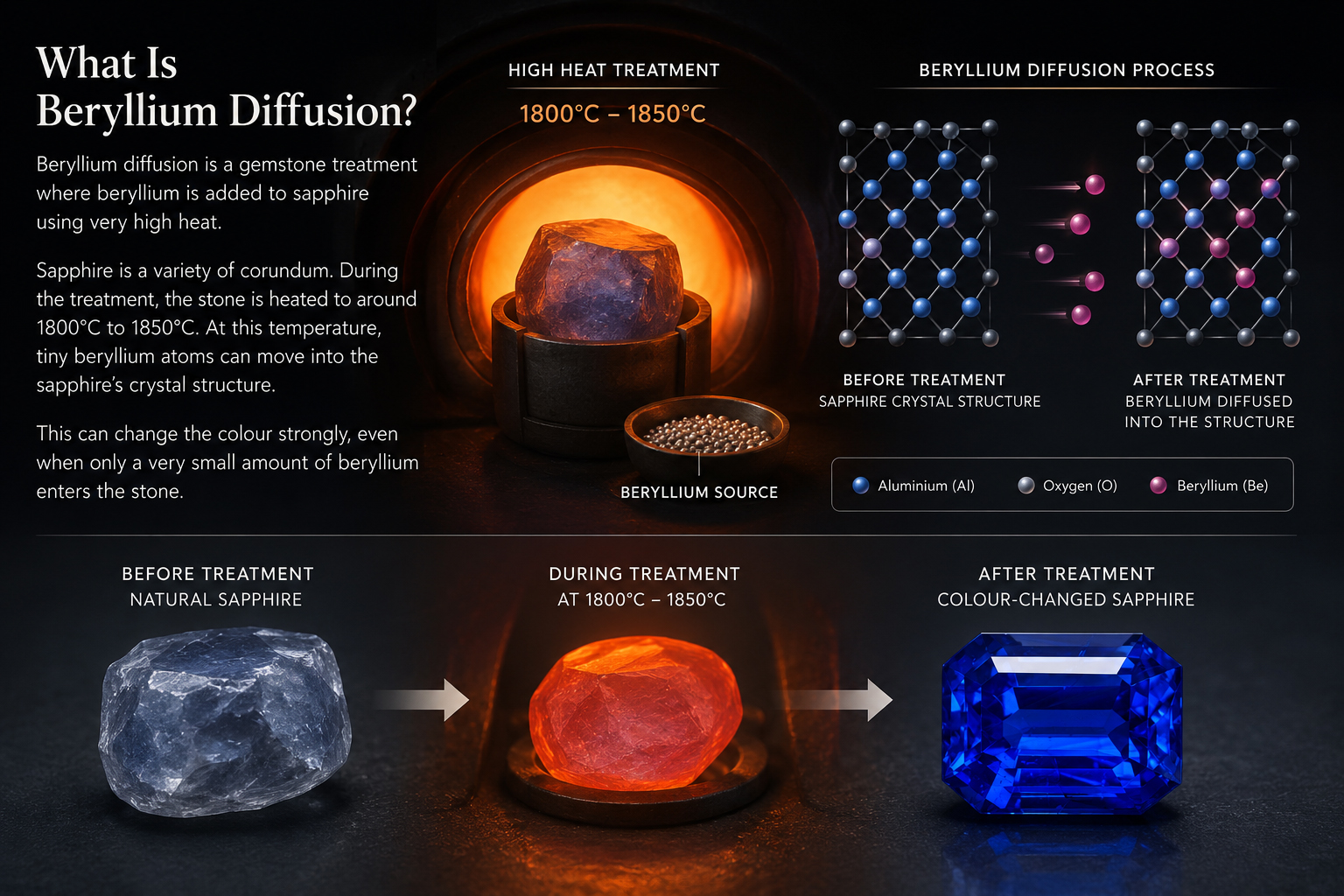
Beryllium diffusion is a gemstone treatment where beryllium is added to sapphire using very high heat. Sapphire is a variety of corundum. During the treatment, the stone is heated to around 1800°C to 1850°C. At this temperature, tiny beryllium atoms can move into the sapphire’s crystal structure.
This can change the colour strongly, even when only a very small amount of beryllium enters the stone.
Why Is This Treatment Used?
Beryllium diffusion is often used on sapphires that do not respond well to normal heat treatment.
Common starting materials include:
- Pale green sapphires
- Pale blue sapphires
- Colourless sapphires
- Pink sapphires
- Dark purplish red rubies
- Lower-value sapphire rough
The treatment can turn these stones into more attractive colours such as golden yellow, orange, orangey pink, orangey red or brighter blue.
Why Did Beryllium Diffusion Become Famous?
This treatment became widely known around 2001, when many orangey pink sapphires appeared in Thailand at surprisingly low prices. Natural padparadscha sapphires are rare and expensive. So when many similar-looking stones appeared at modest prices, gem laboratories became suspicious.
After testing, experts discovered that beryllium had been diffused into the sapphires to create the attractive colour.
What Colours Can Beryllium Diffusion Create?
Beryllium diffusion can produce many vivid colours, including:
- Golden yellow
- Orange
- Orangey pink
- Orangey red
- Bright red
- Blue
Pink sapphires can become padparadscha-like stones when yellow colour is added around a pink core. Pale green or colourless sapphires can become bright yellow. Darker blue stones can sometimes become brighter blue after a two-step treatment.
How to Identify Beryllium Diffused Sapphire
Some beryllium diffused sapphires can be identified by careful observation, but others are very difficult to detect without laboratory testing.
A common sign is a yellow to orange colour rim around the stone. This is often seen in partially diffused orangey pink, orange or red sapphires.
This rim follows the shape of the cut stone. Natural colour zoning usually does not follow the outline of the cut. Natural zoning is often patchy, angular or hexagonal.
In blue beryllium diffused sapphires, the rim may appear colourless instead of yellow or orange.
Other possible signs include:
- Very intense colour
- Evidence of very high heat treatment
- Altered crystal inclusions
- Melted or expanded inclusions
- Dotted silk
- Flux-healed feathers
- Synthetic overgrowth
- Blue halos around inclusions
However, these signs do not always prove beryllium diffusion. They only suggest that the stone may have been exposed to very high heat.
Can Normal Gem Testing Detect It?
Most standard gem testing tools cannot confirm beryllium diffusion.
Tools such as a loupe, microscope, refractometer, UV light or basic spectroscope may not be enough. This is because beryllium is very light and may be present in tiny amounts.
Reliable identification usually needs advanced laboratory equipment such as:
- SIMS
- LIBS
- LA-ICP-MS
For valuable sapphires, a proper gem laboratory report is very important.
Is Beryllium Diffusion Permanent?
Yes. Beryllium diffusion is considered stable and permanent. The colour will not normally fade in sunlight or with normal wear. But there is one important warning. If the stone is partially diffused, recutting or heavy repolishing may remove part of the colour layer. This can change the appearance of the stone.
Should Sellers Disclose This Treatment?
Yes. Beryllium diffusion must be clearly disclosed.
A seller should describe the stone as:
- Beryllium diffused sapphire
- Beryllium treated sapphire
- Colour treated by beryllium diffusion
This matters because beryllium diffused sapphires are usually worth much less than natural untreated or traditionally heat-treated sapphires. Beryllium diffused sapphires can be beautiful, colourful and affordable. There is nothing wrong with buying one if the treatment is honestly disclosed.
The problem starts when treated sapphires are sold as natural or only “heated” without full explanation. If you are buying a valuable yellow, orange, padparadscha-like, red or bright blue sapphire, always ask for treatment disclosure and a trusted lab report. A beautiful sapphire is worth buying only when you know exactly what you are paying for.