
Pearl Identification and Classification: How Experts Tell Real Pearls from Fake Ones
Pearls have fascinated people for centuries with their soft glow, natural beauty, and timeless elegance. Unlike most gemstones that come from the earth, pearls are created inside living mollusks such as oysters and mussels. Because of this, pearls are among the most unique gems in the jewelry world.
But not all pearls are the same. Some are natural, some are cultured, and others are imitation products designed to look like real pearls. Understanding pearl identification and classification helps buyers make smarter decisions and avoid costly mistakes. This guide explains how pearls are identified, classified, and evaluated in simple English.
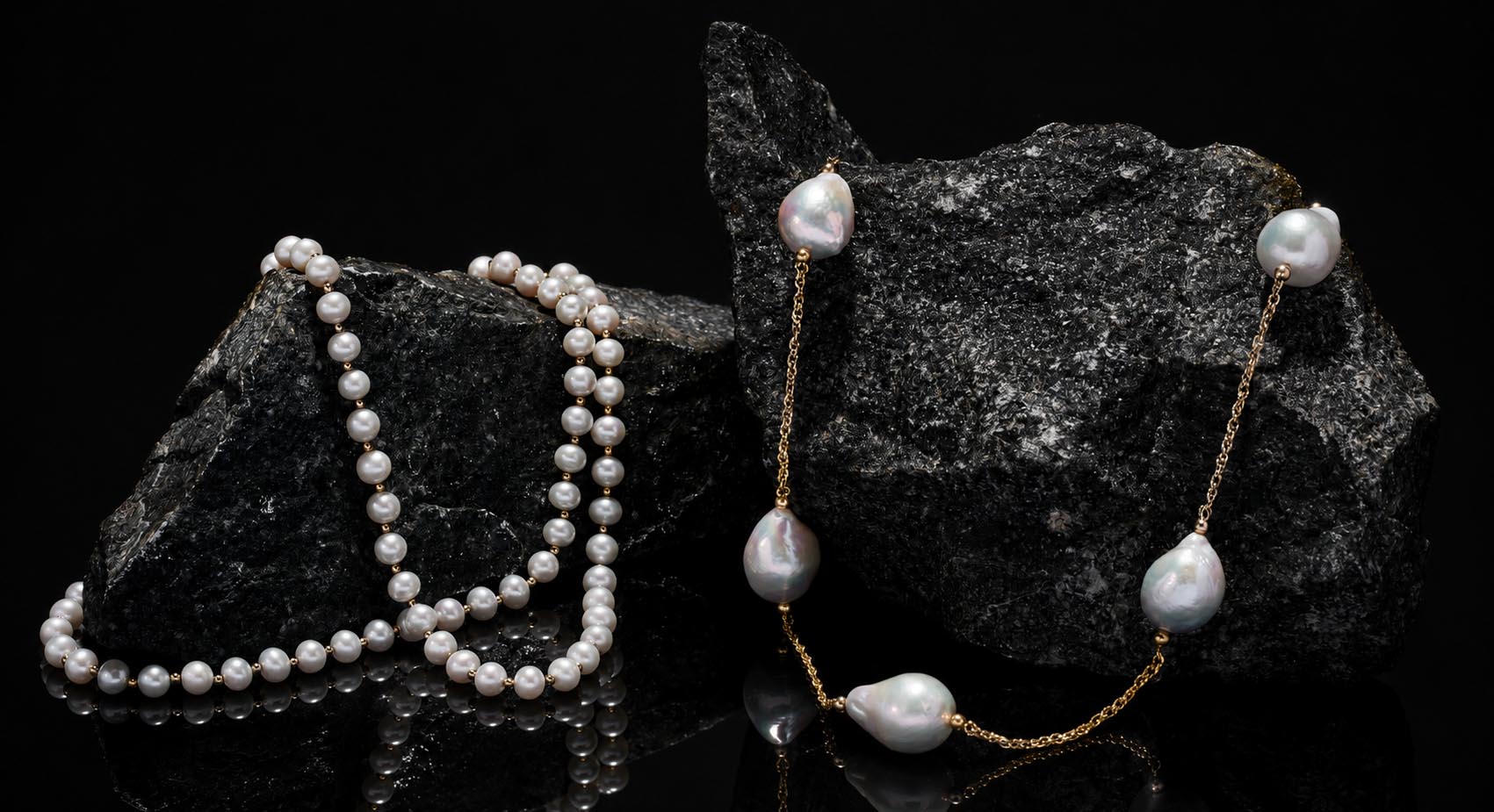
What Are Pearls?
Pearls are organic gemstones formed inside mollusks. They mainly consist of calcium carbonate and organic material called conchiolin. Pearls form when the mollusk protects itself from irritation by covering the foreign material with layers of nacre, also known as mother of pearl. Over time, these layers build up and create a pearl.
Pearls are valued for their:
- Luster
- Surface quality
- Shape
- Color
- Size
- Rarity
The Two Main Types of Pearls
Pearls are generally divided into two main groups:
Whole Pearls
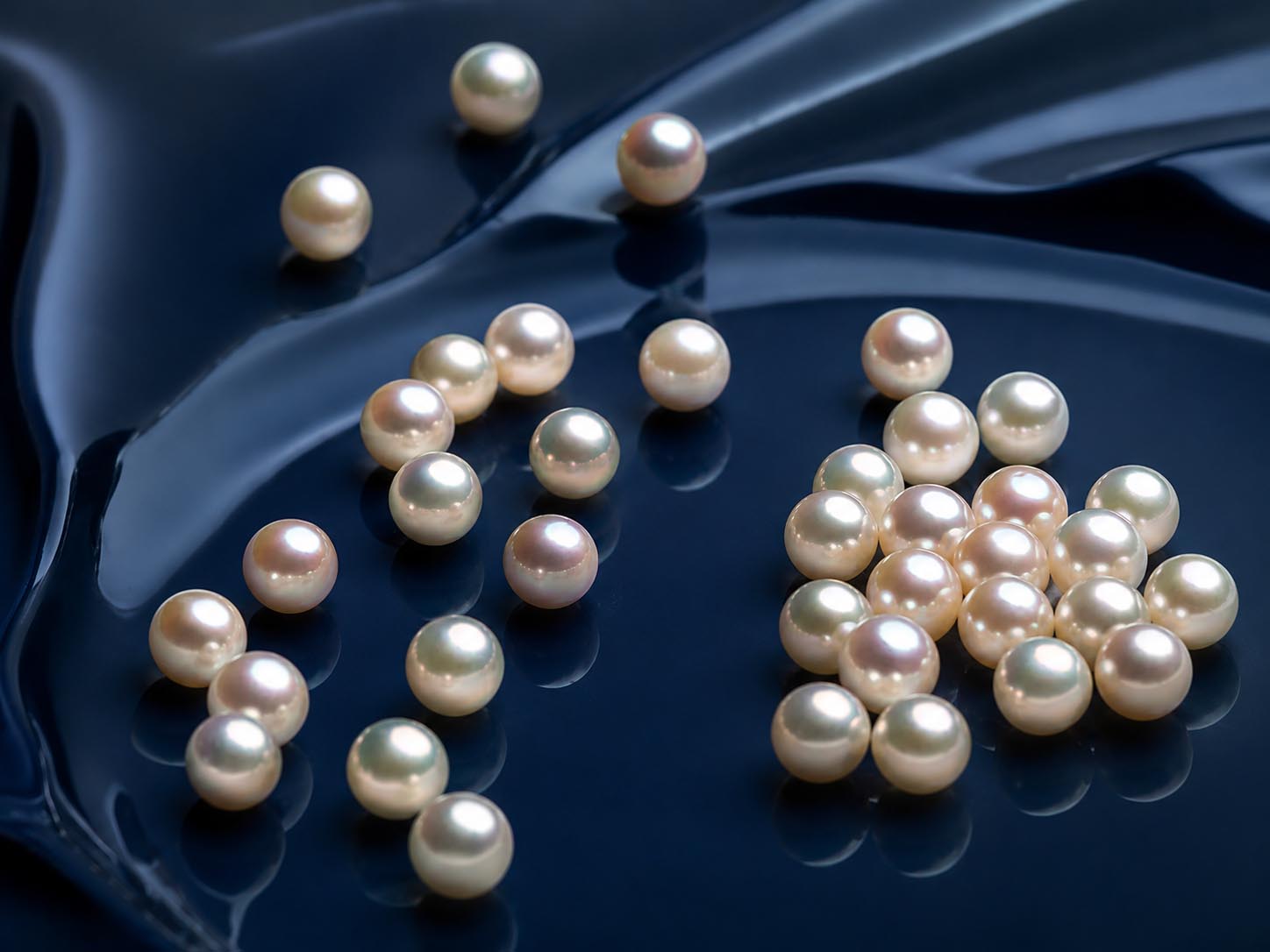
Whole pearls form completely inside the mollusk’s soft tissue and are not attached to the shell.
These are the pearls most people recognize in jewelry.
Blister Pearls
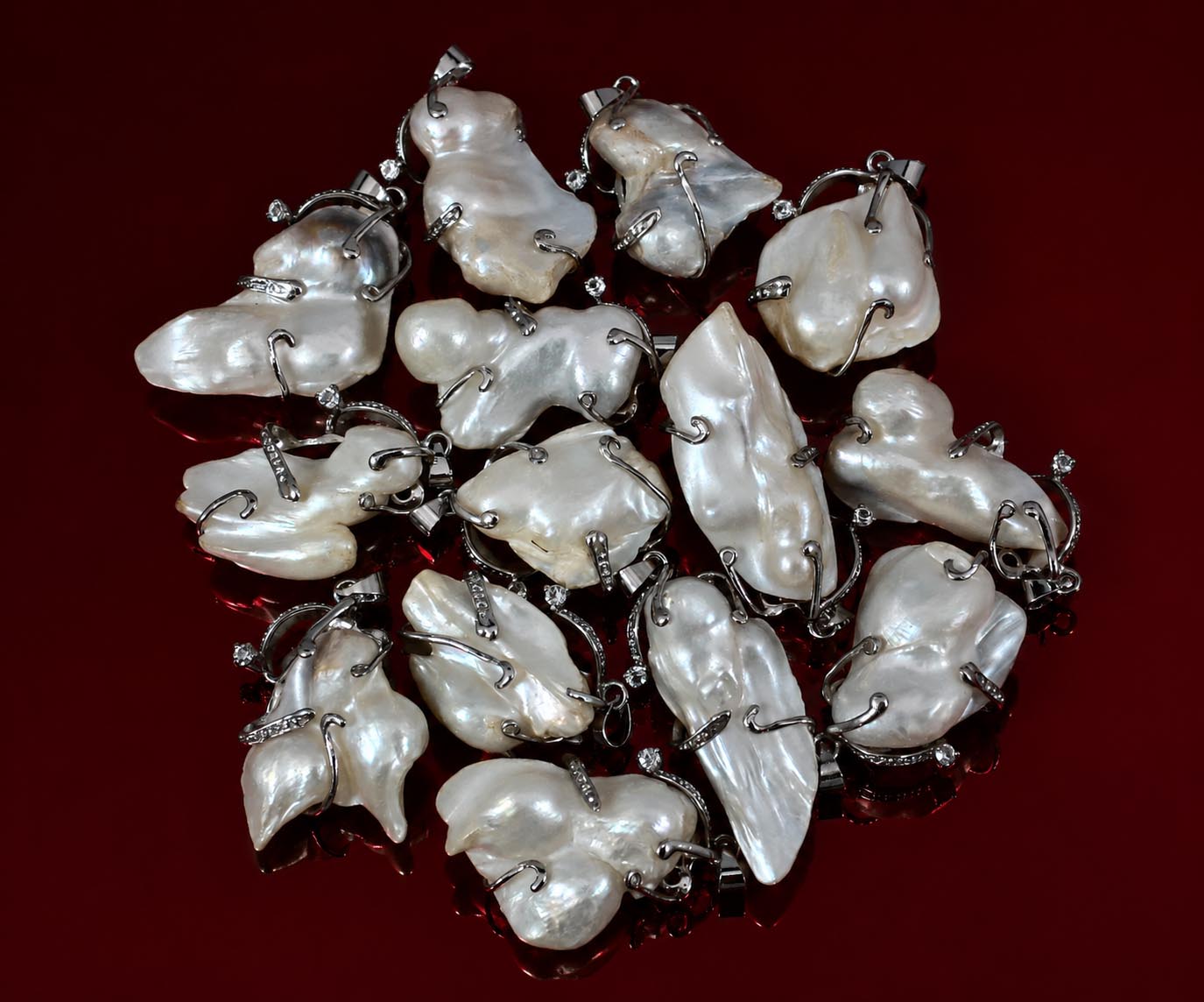
Blister pearls become attached to the inside of the shell during formation. Over time, the pearl merges with the shell. Blister pearls are often cut directly from the shell and used in jewelry designs
Natural Pearls vs Cultured Pearls
One of the most important parts of pearl identification is determining whether a pearl is natural or cultured.
Natural Pearls
Natural pearls form without human assistance. They occur naturally when an irritant enters the mollusk by accident.
These pearls are extremely rare today and can be very expensive.
One famous example is the legendary La Peregrina Pearl, once owned by actress Elizabeth Taylor.
Cultured Pearls
Cultured pearls are created with human help. Pearl farmers insert tissue or a bead into the mollusk to start pearl formation.
Today, more than 90% of pearls sold worldwide are cultured pearls.
Common cultured pearl types include:
- Akoya pearls
- Tahitian pearls
- South Sea pearls
- Freshwater pearls
How Experts Identify Pearls
Professional gem laboratories use advanced techniques to identify pearls and determine their origin.
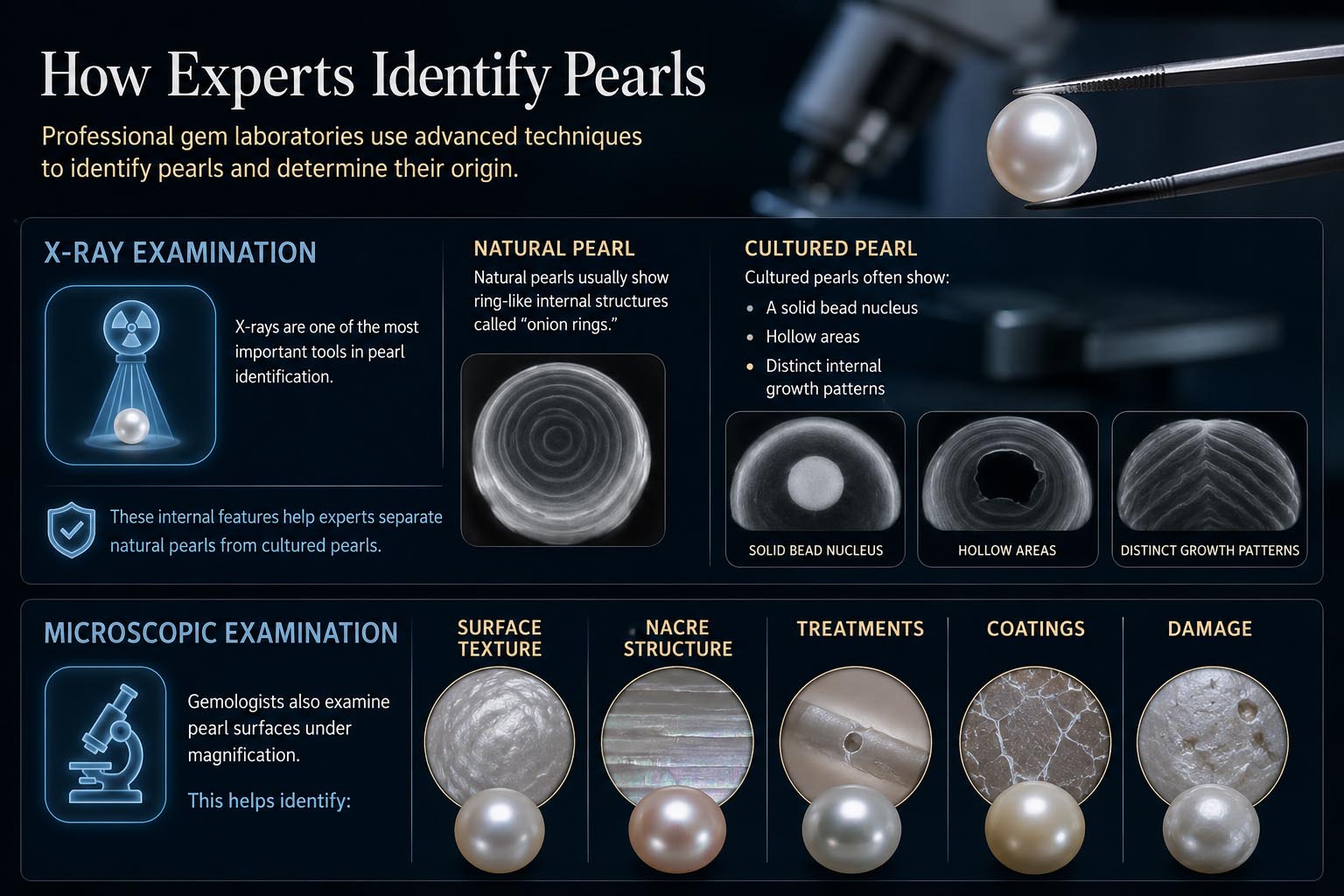
X-Ray Examination
X-rays are one of the most important tools in pearl identification. Natural pearls usually show ring-like internal structures called “onion rings.”
Cultured pearls often show:
- A solid bead nucleus
- Hollow areas
- Distinct internal growth patterns
These internal features help experts separate natural pearls from cultured pearls.
Microscopic Examination
Gemologists also examine pearl surfaces under magnification.
This helps identify:
- Surface texture
- Nacre structure
- Treatments
- Coatings
- Damage
Saltwater vs Freshwater Pearls
Pearls can form in both saltwater and freshwater environments. Knowing the environment helps buyers understand what they are purchasing.
Saltwater Pearls
Saltwater pearls are usually produced by oysters in oceans and seas. Popular saltwater pearls include:
- Akoya pearls
- Tahitian pearls
- South Sea pearls
Freshwater Pearls
Freshwater pearls are mainly grown in lakes and rivers. They are often more affordable and come in a wide variety of shapes and colors.
Nacreous and Non Nacreous Pearls
Pearls are also classified by their surface structure.
Nacreous Pearls
These pearls contain layers of nacre and display the classic pearl glow known as pearly luster. Most cultured pearls on the market are nacreous.
Non Nacreous Pearls
These pearls do not contain traditional nacre but can still be highly valuable.
Examples include:
- Conch pearls
- Melo pearls
- Clam pearls
Some non nacreous pearls display a beautiful flame-like appearance.
Common Pearl Treatments
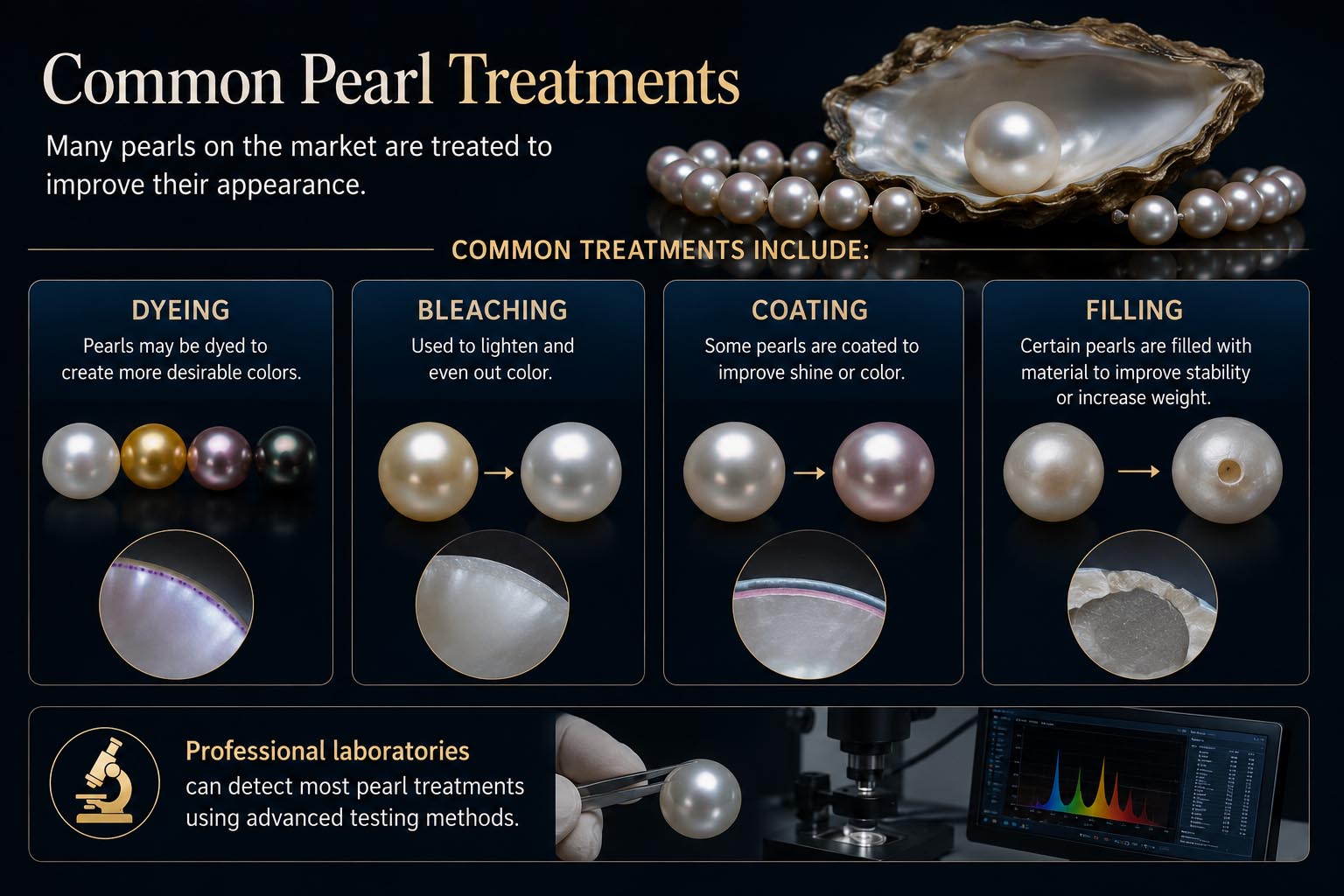
Many pearls on the market are treated to improve their appearance.
Common treatments include:
Dyeing
Pearls may be dyed to create more desirable colors.
Bleaching
Used to lighten and even out color.
Coating
Some pearls are coated to improve shine or color.
Filling
Certain pearls are filled with material to improve stability or increase weight.
Professional laboratories can detect most pearl treatments using advanced testing methods.
The 7 Factors Used to Evaluate Pearl Quality
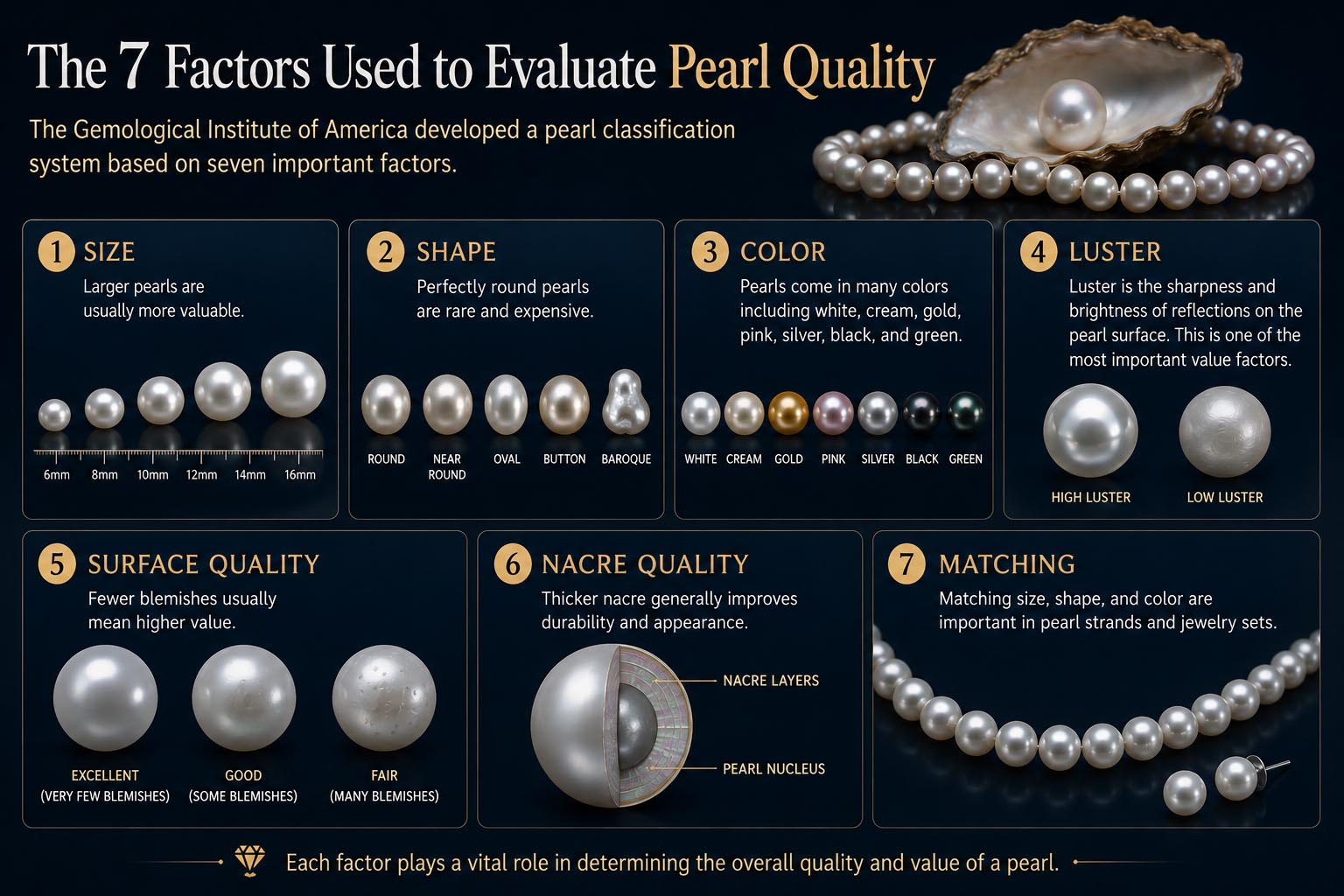
The Gemological Institute of America developed a pearl classification system based on seven important factors.
1. Size
Larger pearls are usually more valuable.
2. Shape
Perfectly round pearls are rare and expensive.
3. Color
Pearls come in many colors including white, cream, gold, pink, silver, black, and green.
4. Luster
Luster is the sharpness and brightness of reflections on the pearl surface. This is one of the most important value factors.
5. Surface Quality
Fewer blemishes usually mean higher value.
6. Nacre Quality
Thicker nacre generally improves durability and appearance.
7. Matching
Matching size, shape, and color are important in pearl strands and jewelry sets.
Why Pearl Identification Matters
Understanding pearl identification helps buyers:
- Avoid fake pearls
- Understand pearl value
- Buy with confidence
- Recognize treatments
- Appreciate pearl rarity
Whether you are buying pearls for jewelry, investment, or collecting, knowledge is your best protection. Pearls are among the most fascinating gemstones in the world because they are created by living creatures. Each pearl carries a unique story of nature, environment, and formation.
Learning how pearls are identified and classified allows you to understand what truly makes one pearl more valuable than another. The next time you look at a pearl necklace or loose pearl, remember that beauty is only part of the story. The real value lies inside the pearl itself.