
What Are Star Sapphires and Star Rubies? The Rare “Star Gems” Everyone Is Talking About
Gemstones are already fascinating, but some go far beyond sparkle. Imagine a gem that reveals a glowing star right on its surface when light hits it. That is exactly what makes star sapphires and star rubies so special.
These rare stones belong to a unique group of gemstones that show optical effects, also known as phenomena. While you may have heard of opals with their play of color or alexandrite with color change, star gemstones stand out because they display a moving star across their surface.
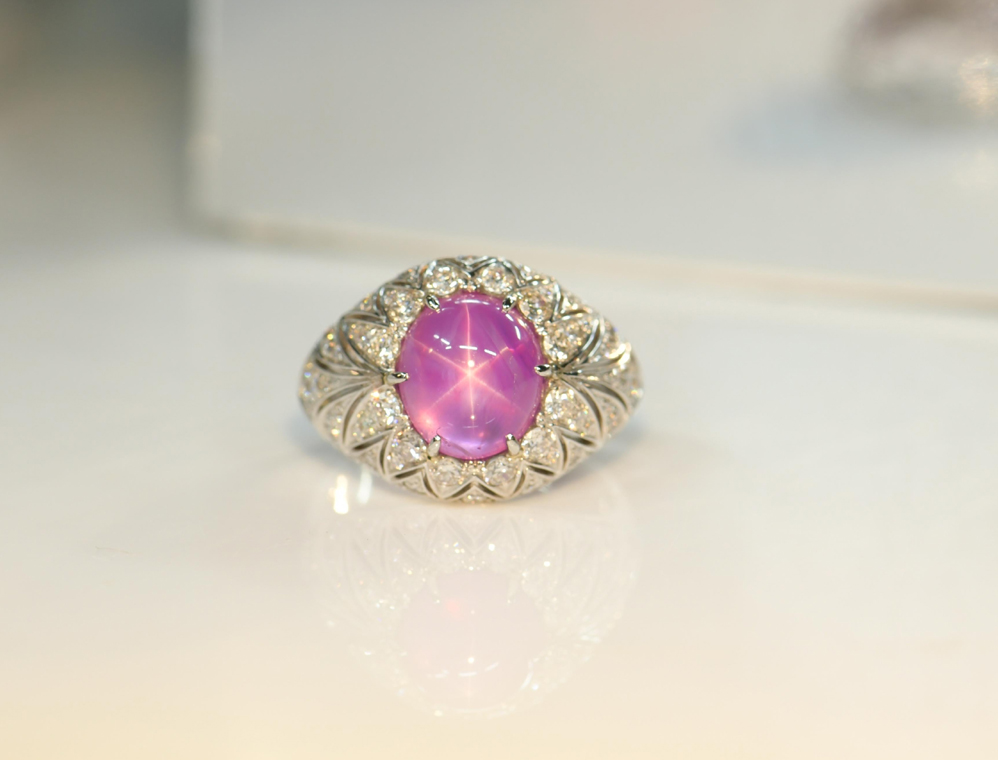
What Is Asterism?
The star effect you see in these gems is called asterism. It is most commonly found in corundum, the mineral family that includes both sapphires and rubies.
Instead of being caused by the gemstone’s surface, the star is created by tiny internal inclusions. These inclusions are made of rutile, which forms long, needle-like structures inside the stone.
When these needles align in specific directions, they reflect light in a way that creates a star pattern on the surface. When the stone is moved under a light source, the star appears to glide smoothly across it.
How the Star Effect Forms
Most inclusions in gemstones reduce value, but in this case, they create something rare and beautiful.
Here is how the effect works:
- Rutile needles form inside the gemstone
- They align in multiple directions based on the crystal structure
- Light reflects off these aligned inclusions
- A star shape appears on the surface
Because corundum naturally forms as a six-sided crystal, the inclusions can align in six directions. This is why most star sapphires and rubies display a six-ray star.
In very rare cases, you might even see a 12-ray star, which is highly prized by collectors.
Why Cabochon Cutting Is Essential

Star gemstones are not faceted like traditional gems. Instead, they are cut into smooth, rounded shapes called cabochons.
This shape is crucial because:
- It allows the star to form clearly on the surface
- The flat base and domed top help light reflect properly
- It enhances the movement of the star when viewed under light
Without this type of cut, the star effect would not be visible.
Colors of Star Sapphires and Rubies
Star sapphires come in a variety of colors, not just the classic blue. Some common shades include:
- Blue
- Grey and grey-blue
- Light pastel tones
- Brownish hues
- Black (known as black star sapphire)
When the color shifts into red, pink, or purplish red, the stone is classified as a star ruby, which is usually the most valuable.
What Makes a High-Quality Star Gem?
Just like any gemstone, quality plays a big role in value. When evaluating a star sapphire or ruby, experts look for:
Body Color
- Rich, vivid, and evenly distributed color
- Attractive tone without dull patches
Clarity and Transparency
- Semi-transparent stones are preferred
- Minimal cloudy or distracting inclusions
The Star Itself
- Sharp and well-defined rays
- Even spacing between rays
- Strong contrast against the stone’s color
- Rays that extend fully to the edges
- Smooth movement when light is moved across the surface
A weak or blurry star lowers the value, especially if it disappears in certain areas.
How to See the Star Clearly
To properly view the star effect, lighting is key.
- Use a direct, focused light source such as a flashlight
- Move the light slowly across the stone
- Watch how the star shifts smoothly from side to side
In diffused lighting, like sunlight on a cloudy day, the star may be harder to see even in high-quality stones.
Natural vs Synthetic Star Gems
Because star sapphires and rubies are so unique, many synthetic versions exist on the market.
Here are signs a stone might be synthetic:
- Extremely perfect color with no imperfections
- A star that looks too sharp and flawless
- A perfectly flat and overly smooth base
- A plastic-like or glassy appearance
Natural stones usually show small imperfections, such as:
- Slight unevenness in shape
- Minor inclusions or cloudy areas
- Less than perfect star symmetry
If a stone looks too perfect and is priced surprisingly low, it is likely not natural.
Are Star Gemstones Valuable?
Yes, but their value can vary widely.
Factors that affect price include:
- Color quality
- Strength and clarity of the star
- Transparency
- Overall rarity
High-quality star rubies and deep blue star sapphires can reach very high prices, especially if the star is sharp and well-centered.
Other Rare Star Gemstones
While sapphires and rubies are the most well-known, other gemstones can also display asterism, including:
- Garnet
- Spinel
- Diopside
These are even rarer and often sought after by collectors
A Gem with History and Mystery
Star sapphires have been known since at least the 1500s. In the past, people believed these stones held magical powers.
Some thought they could:
- Bring mental clarity
- Offer protection
- Reveal glimpses of the future
They were even called “stones of destiny,” adding to their mystique and appeal.
Star sapphires and star rubies are more than just gemstones. They are natural works of art formed deep within the earth, combining science, rarity, and beauty.
Whether you are a collector or simply curious, these glowing star gems offer something truly unforgettable.