
Taaffeite: The Unplanned Discovery of One of the World’s Rarest Gemstones
Taaffeite is known as one of the rarest gems known to science and gemology. It is Valued more by collectors than by the typical jewelry trade, as it is not only famous for its insufficiency but also for its unusual discovery, because it is found from a faceted stone instead from the earth.
Discovery and Identification
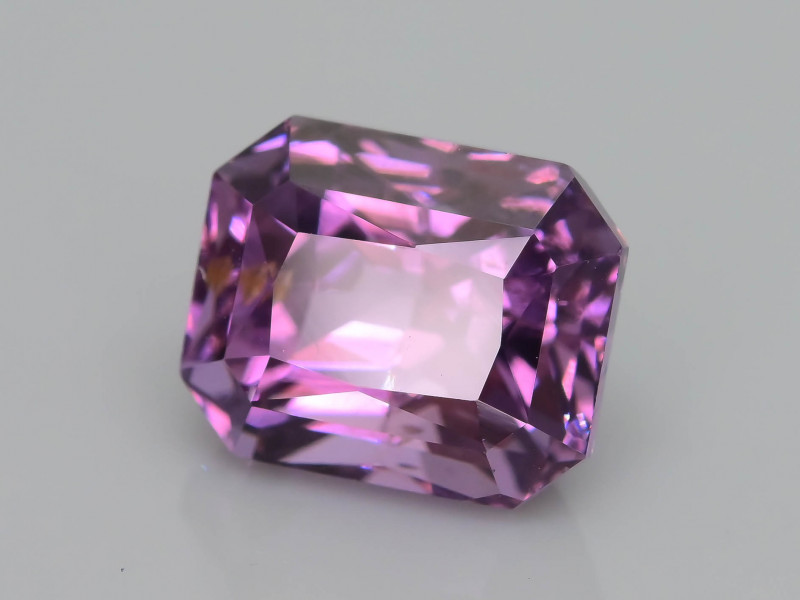
Image Credit : https://www.gemrockauctions.com/
Taaffeite was discovered by Richard Taaffe in 1945 who’s an Irish gemologist. At first it was labeled as spinel but while examining Taaffe noticed something unusual: the stone displayed double refraction, something that spinel does not retain. Further study confirmed it was a previously unidentified mineral type and it was later named Taaffeite in his honor.
Which makes taaffeite unique in gem history is that it is the only gemstone first known from a cut and polished stone.
Chemical and Physical characteristics
Taaffeite is a beryllium–magnesium–aluminium oxide with the chemical formula of BeMgAl₄O₈ as it crystallizes in the hexagonal system and is optically uniaxial.
Key properties of the gem:
- Hardness: on the Mohs scale its 8–8.5
- Luster: Vitreous
- Transparency: Transparent to translucent
- Optics: Double refraction (birefringent)
- Fracture: Conchoidal to rough
- Optical Character: Uniaxial, doubly refractive
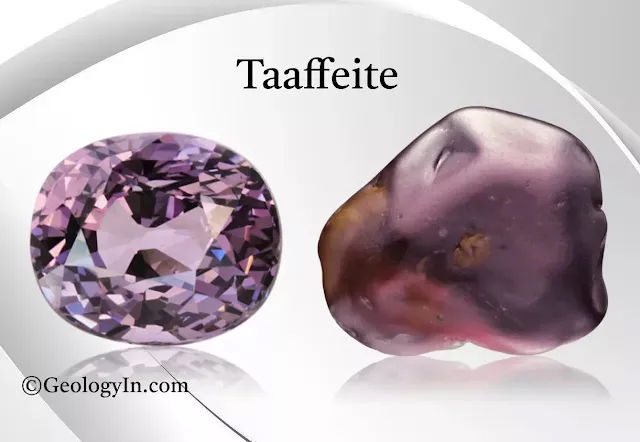
Taaffeite haves good durability due to these properties but however it can’t be used for everyday jewelry because of its rarity.
Appearance and Color
Most taaffeite gemstones have soft, sophisticated shades such as:
- Mauve
- Lavender
- Pinkish violet
- Rarely, colorless or pale gray
Color saturation and clarity are key factors in value valuation, with richly tinted stones being the most required after.
Rarity and Sources
Taaffeite is extremely rare, as translucent crystals rarely mature to a size suitable for cutting. Accordingly, gem-quality material is extraordinarily limited, and even today only a small number of faceted samplings are known to exist, most of which exist in private collections or museum holdings.
Primary sources:
- Sri Lanka
- Southern Tanzania
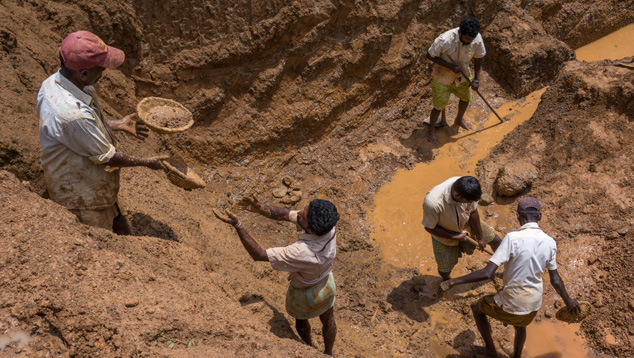
Image Credit : https://www.gia.edu/
It is more likely to be discovered accidentally in a mixed gemstone package Rather than finding it mined internationally.
Identification and Comparable Stones
Taaffeite can thoroughly bear a resemblance to spinel and musgravite,which is another rare beryllium-containing gemstone. Because their physical properties can overlay, have a need of accurate identification of advanced laboratory testing. Therefore, certified stones from upright gem laboratories are important.
Significance in Gemology
Taaffeite has a specialty in gemology due to its:
- Unique discovery history
- Scientific importance as a different mineral species
- Unusual rarity in faceted form
However rarely seen in jewelry, taaffeite is known as one of the most captivating and respected gemstones among collectors and gem professionals all over the world.