Hatton Garden, London: History, Jewelry, and Useful Insight
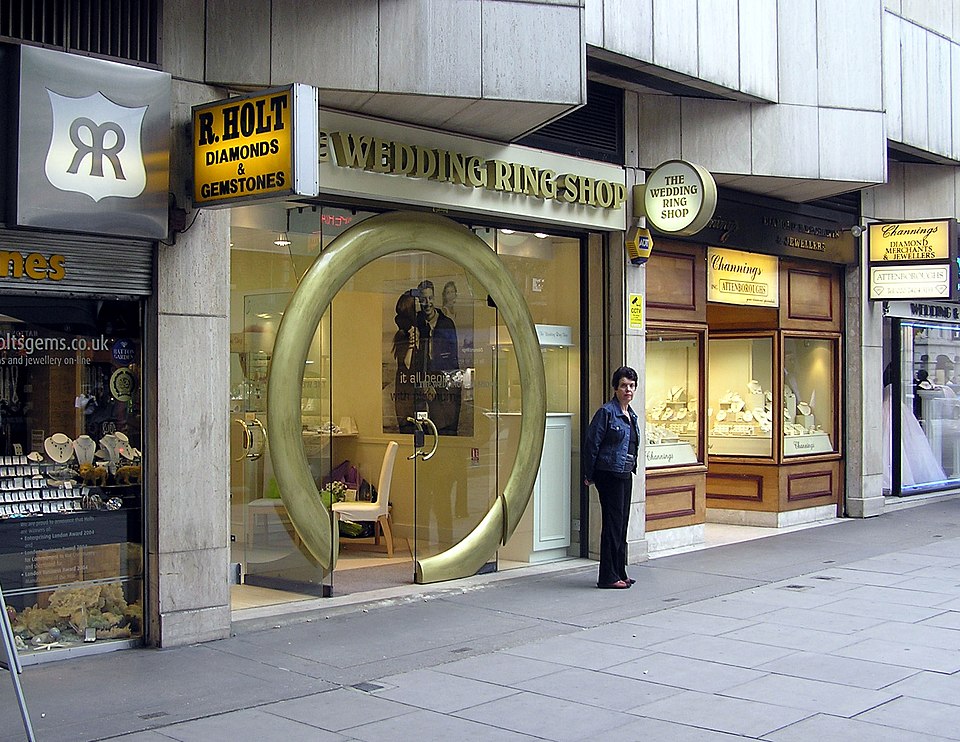
Image Credit : https://en.wikipedia.org/
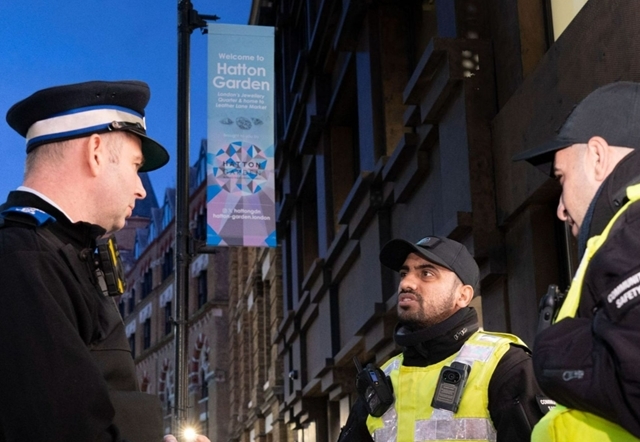
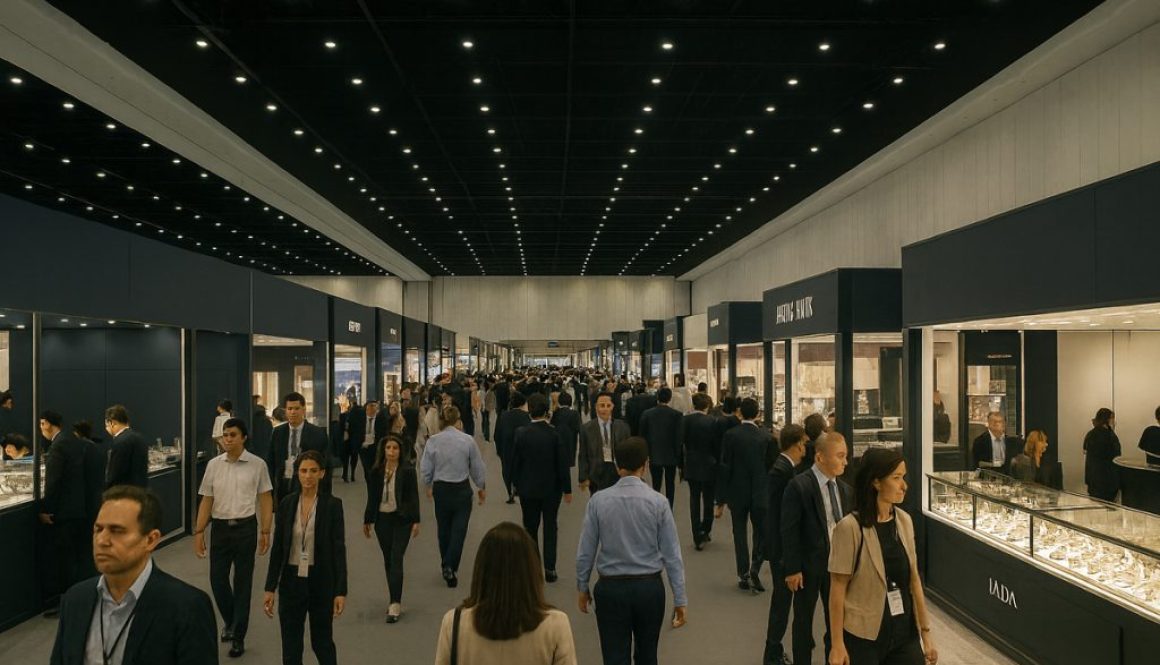
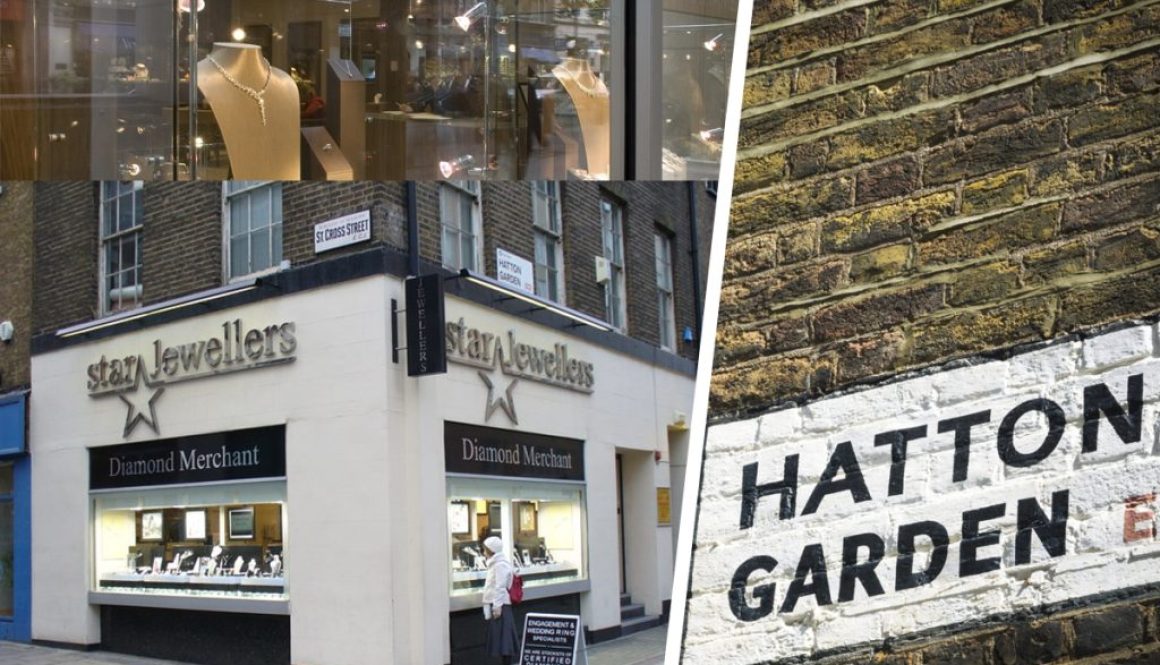
Hatton Garden Located in Holborn, in the London Borough of Camden and it is widely known as the Centre of the UK’s jewelry and diamond trade. For over a century it has been a place where gems are sold, brought cut and displayed. And it also has some of London’s most skilled craftspeople work. Today, Hatton Garden remains to put historic legacy with modern knowledge, making it an essential destination for anyone interested in fine jewelry.
To increase in value Hatton Garden fully, it helps to understand where it came from and how it operates today.
The range now known as Hatton Garden was originally part of the land of the Bishops of Ely which was used as gardens and woods beyond the medieval City of London. This open land remained largely untouched for centuries until 1581, when Queen Elizabeth I decided it to her Lord President, Sir Christopher Hatton. As London expanded, the gardens were built over and the district gradually adopted his name. Hatton Garden had become a mixed residential and commercial area, by the 17th and 18th centuries. One of the flawless reminders of its early history is St Etheldreda’s Church in Ely Place, one of the oldest remaining medieval churches in London, which is still in use today.
It is located near the City of London, Hatton Garden’s identity as a jewelry district developed in the 19th century. It’s, along with access to banks, insurers, and transport routes, made it perfect for handling high-value goods. Skilled jewelers and diamond dealers—many connected to European diamond centres such as Amsterdam and Antwerp—established workshops and exchange offices in the area.
Hatton Garden had become London’s principal jewelry quarter by the late 1800s. Over time, it established a tightly connected network of specialists, including diamond dealers, stone cutters, setters, designers, valuers, goldsmiths and secure vault operators. This attention of expertise remains its defining feature, with around 300 jewelry-related businesses in the district today.
Modern Hatton Garden is not a typical shopping street but a working trade environment. Many grounds have discreet entrances and go by an appointment, combining trade showrooms with workshops and offices on upper floors.
The area is on the whole known for:
• Engagement and wedding rings
• Loose diamonds and coloured gemstones
• Modified and custom-made jewelry
• Jewelry repairs, remodeling, and valuations
Numerous globally major companies have been based here over the years, including De Beers, underlining Hatton Garden’s role in the global diamond trade.
Useful Advice for Visitors and Buyers
For those planning to buy jewelry, Hatton Garden offers advantages—provided visitors approach it considerately.
It is sensible to visit multiple jewelers, as charges, design styles, and stone quality can be different. Trustworthy dealers will explain the 4 Cs of diamonds and provide recognized certification, which is most commonly from the GIA or HRD.
One of Hatton Garden’s strong suit is customized work. Hiring a custom piece often costs no more than purchasing a branded high-street item, while allowing better control over design and materials. Security measures can feel official, but they are standard in a district treatment valuable goods; professional service is the standard.
Opening Hours and Position
You can find Hatton garden between Holborn Circus and Clerkenwell Road.. Most businesses trade during conservative weekday hours, which are usually Monday to Friday, 10am to 5pm.it has limited Saturday opening are available, with most grounds closed on Sundays. Also appointments are recommended for consultations or custom-built jewelry.
Crime, public Attention and Vaults
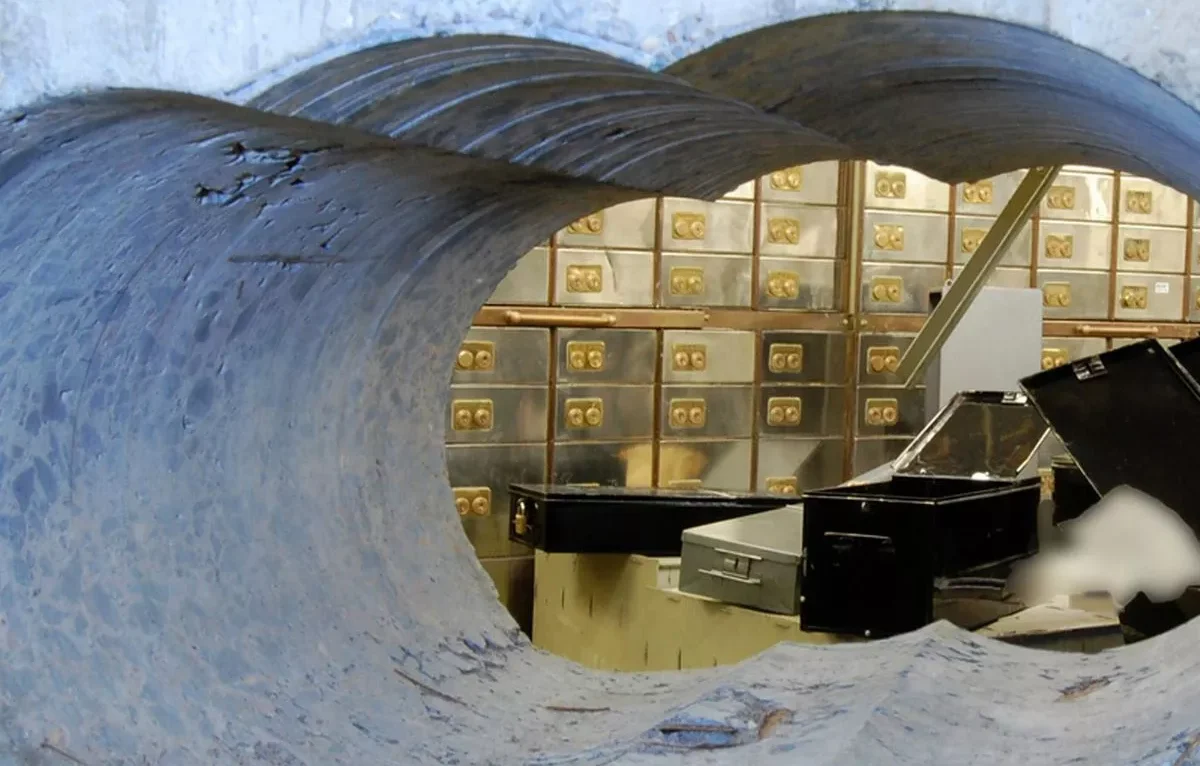
Image Credits : https://tavexbullion.co.uk/
The concentration of wealth has also brought disrepute. About £7 million value of jewels were stolen from Graff Diamonds In 1993. The part became internationally well-known again in 2015. It happened when a group of thieves bankrupt a safe-deposit vault over the Easter weekend. Courts later established that around £14 million was stolen; most of it was never recovered.
The Neighboring Area
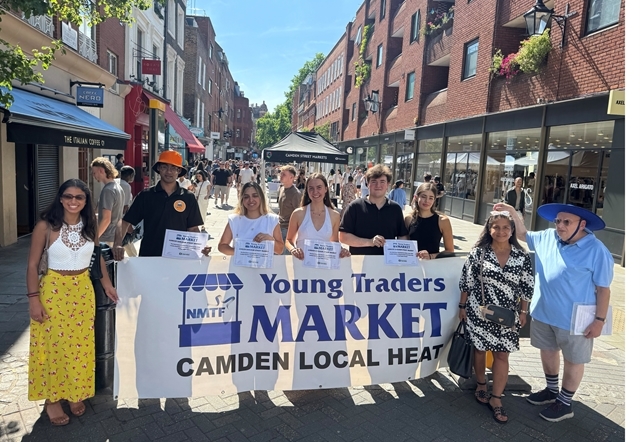
Hatton Garden forms part of a historically rich compact of central London. Just a few meters away, Ely Place offers a sight of medieval London, Leather Lane Market makes this area more busier by establishing weekday food stalls, and Clerkenwell is recognized for its architectural legacy, design studios, and typical pubs.
Yes—if you have a clear purpose. Hatton Garden is not designed for a casual look around or tourism alone. Its value lies in capability, expertise, and access to specialist acquaintance. For those buying fine jewelry, especially diamonds or engagement rings, it remains the most focused and competitive jewelry district in the UK.
Quietly operating behind secure doors in the Centre of London, Hatton Garden endures because it effectively combines centuries of history with a living and Professional trade.
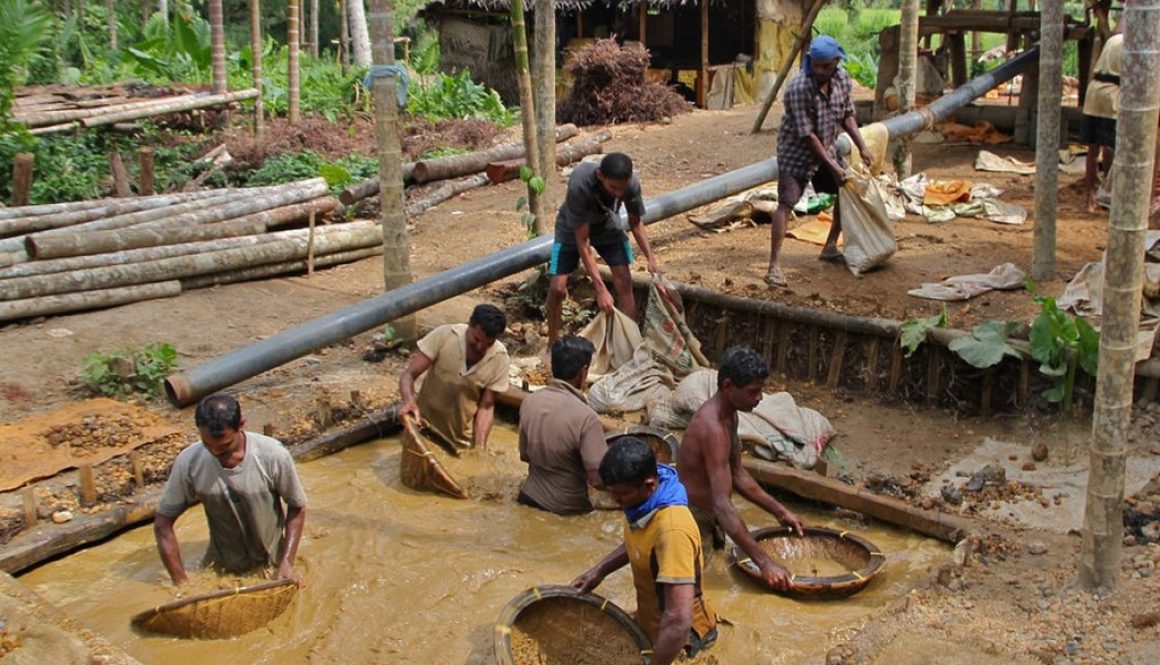
In the global economy, gem industry plays an important part especially in developed countries. As gemstones are a valuable resource, gems such as diamonds, emeralds, sapphires and rubies can provide an income and employment for many people. Yet, the gem industry’s been associated with severe downfalls. That includes child labor, armed conflict, environmental damage and unsafe working conditions.
Ethical sourcing promotes responsible gemstone production by human rights, worker safety, local communities, and the environment sustainability.
Meaning of ethical sourcing
Ethical sourcing means responsible gemstone production and trading. In fact, this contains:
No forced or child labor.
Working conditions of safety and health for miners.
Gemstones can’t be used for violence and conflict.
Activities such as mining cause fewer harm to the environment.
Gemstones can be tracked from the mine to the final customer.
Image Credit : www.airasl.com
According to the United Nations, across the world more than 40 million people work in small scale and artisanal mining across the world. Most of these labors work are informal and also they lack legal protection. Ethical sourcing intentions are to improve their working conditions instead of them being rejected from the global marketplace.
Conflict Gemstones and Ethical Actions
In the 1990s, diamonds were taken to finance supplied conflicts in countries such as Angola, and Liberia. These were known as conflict diamonds.
To deal with this problem, in 2003, the Kimberley Process Certification Scheme was established to prevent conflict diamonds from going into global markets. It is a global system that involves the government, civil society and the diamond industry. According to official Data shows that over 99% of rough diamonds that are traded today are certified through this process.
But the Kimberley Process focus mainly on conflicts relating to rebel groups and doesn’t fully protect the labor rights or wider human rights issues. This shows that stronger ethical sourcing standards are required.
Working conditions and Human rights
Study by Human Rights Watch and the International Labour Organization (ILO) shows that precious stone mining in some regions remains to involve:
Child labor
Unsafe and unbalanced mining conditions
Tunnel collapses and injuries
Long working hours and low wages
To improve safety standards to follow labor laws, and allow regular reviews, ethical sourcing programs require traders. These processes help protect labors and help funding their families.
Environmental Effect
If it’s not maintained properly, gemstone mining can cause severe environmental damage. Common issues include:
Deforestation
Soil erosion
Pollution of rivers and groundwater
Loss of wildlife habitats
The United Nations Environment Programme (UNEP) highlights that responsible mining follows land rebuilding and controlled water use, can significantly decrease environmental damage. Ethical sourcing sponsors the use of these practices.
Transparency and Traceability
However it’s difficult to identify the gemstones true origins because they often pass through many traders before reaching the final consumer.
Reduces permitted, financial, and reputational risks
Helps companies meet universal laws and standards
Responds to developing demand for responsibly sourced gemstones
Conclusion
For the continuing sustainability of gemstone production and trade, Ethical sourcing is very important. It helps to avoid human rights exploitations, protects the environment, and supports fair financial development.
The sector can move past its history of conflict and abuse and build a more clear, fair, and responsible future, by obligating to ethical sourcing.
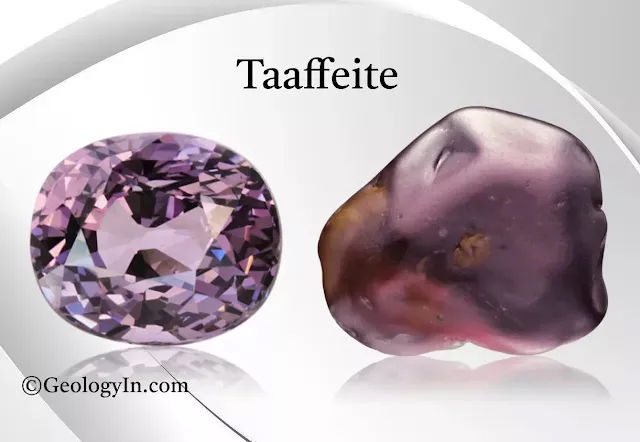
Taaffeite is known as one of the rarest gems known to science and gemology. It is Valued more by collectors than by the typical jewelry trade, as it is not only famous for its insufficiency but also for its unusual discovery, because it is found from a faceted stone instead from the earth.
Discovery and Identification
Image Credit : https://www.gemrockauctions.com/
Taaffeite was discovered by Richard Taaffe in 1945 who’s an Irish gemologist. At first it was labeled as spinel but while examining Taaffe noticed something unusual: the stone displayed double refraction, something that spinel does not retain. Further study confirmed it was a previously unidentified mineral type and it was later named Taaffeite in his honor.
Which makes taaffeite unique in gem history is that it is the only gemstone first known from a cut and polished stone.
Chemical and Physical characteristics
Taaffeite is a beryllium–magnesium–aluminium oxide with the chemical formula of BeMgAl₄O₈ as it crystallizes in the hexagonal system and is optically uniaxial.
Key properties of the gem:
Hardness: on the Mohs scale its 8–8.5
Luster: Vitreous
Transparency: Transparent to translucent
Optics: Double refraction (birefringent)
Fracture: Conchoidal to rough
Optical Character: Uniaxial, doubly refractive
Taaffeite haves good durability due to these properties but however it can’t be used for everyday jewelry because of its rarity.
Appearance and Color
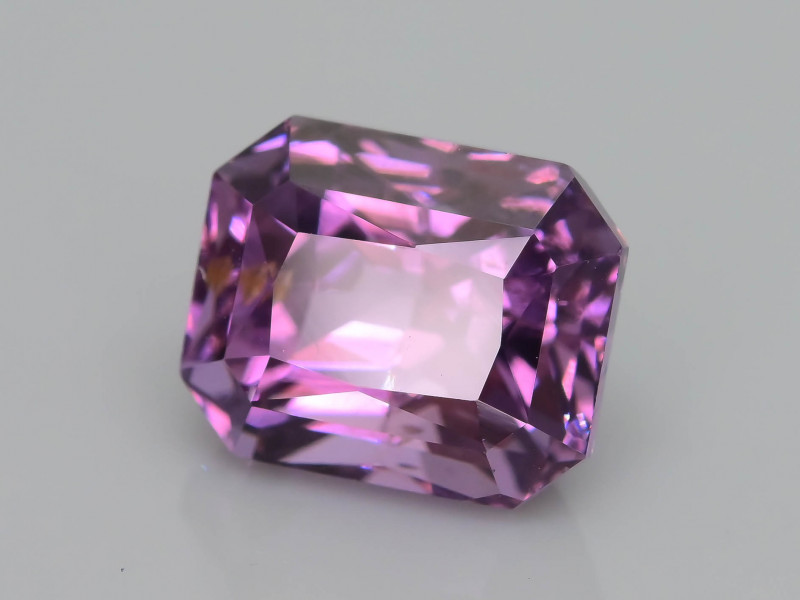
Most taaffeite gemstones have soft, sophisticated shades such as:
Mauve
Lavender
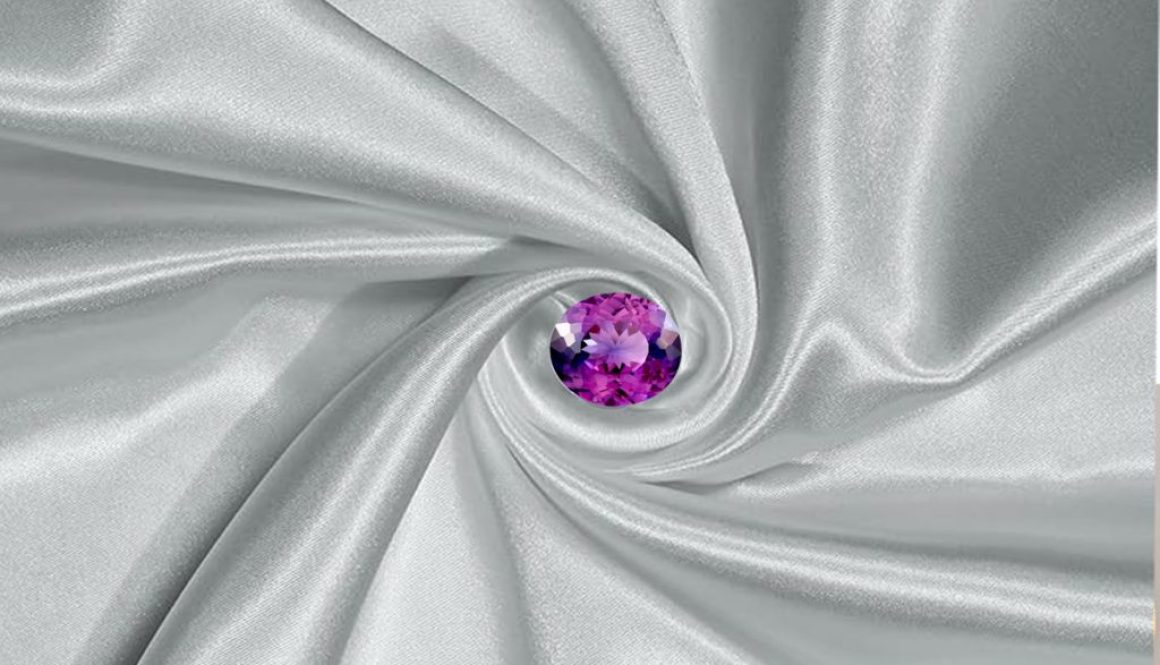
Pinkish violet
Rarely, colorless or pale gray
Color saturation and clarity are key factors in value valuation, with richly tinted stones being the most required after.
Rarity and Sources
Taaffeite is extremely rare, as translucent crystals rarely mature to a size suitable for cutting. Accordingly, gem-quality material is extraordinarily limited, and even today only a small number of faceted samplings are known to exist, most of which exist in private collections or museum holdings.
Primary sources:
Sri Lanka
Southern Tanzania
Image Credit : https://www.gia.edu/
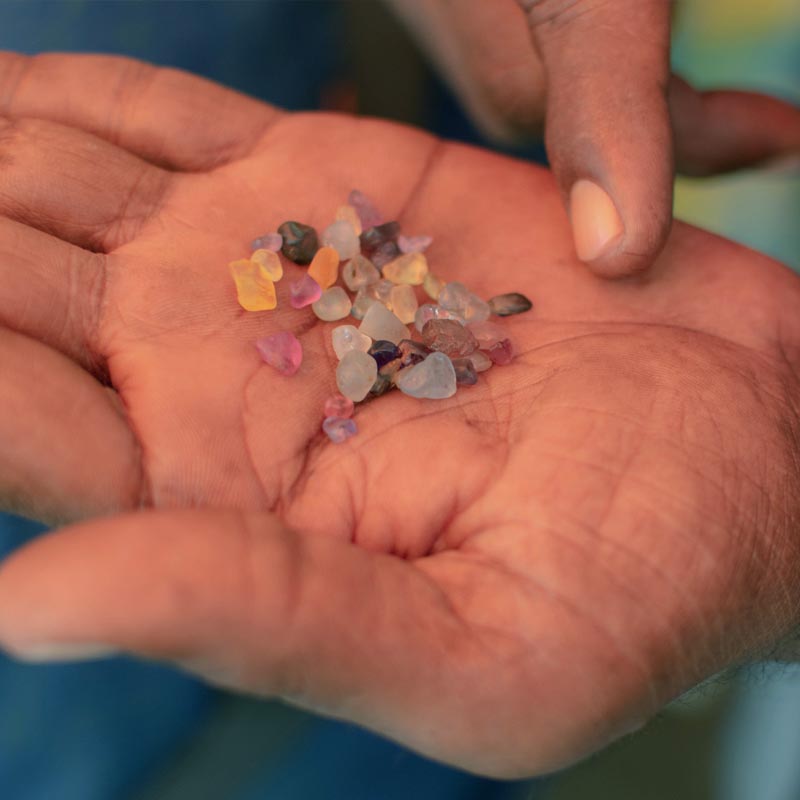
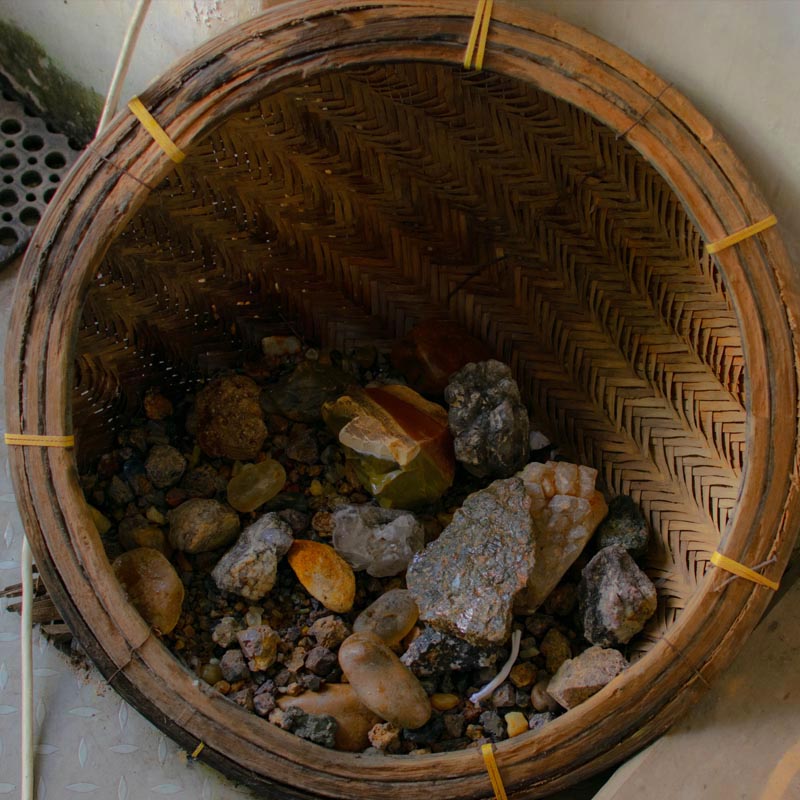
It is more likely to be discovered accidentally in a mixed gemstone package Rather than finding it mined internationally.
Identification and Comparable Stones
Taaffeite can thoroughly bear a resemblance to spinel and musgravite,which is another rare beryllium-containing gemstone. Because their physical properties can overlay, have a need of accurate identification of advanced laboratory testing. Therefore, certified stones from upright gem laboratories are important.
Significance in Gemology
Taaffeite has a specialty in gemology due to its:
Unique discovery history
Scientific importance as a different mineral species
Unusual rarity in faceted form
However rarely seen in jewelry, taaffeite is known as one of the most captivating and respected gemstones among collectors and gem professionals all over the world.
Welcome my gem enthusiasts, If you are new comers to this sparkling world of gem, I am pretty sure you have already heard about Diamonds, Rubies, Sapphires and Emeralds. But have you come across the Spinel. Still a undervalued true splendid beauty and hidden among red rubies thourgh out the history.In this post, I will cover interesting topics such as how spinels are found and what are their formation shapes, rare colors and more. Lets get started.
What Exactly Is Spinel?
Photo credits : https://droyalceylon.com/
Simple, spinel is mineral like sapphires discovered around the world for centuries, formed beneath the surface under intense of heat at pressure. Major chemical in a spinel is Magnesium Aluminum oxide (MgAl₂O₄ ) and it has a Cubic Crystal system. Which means when you find a perfect spinel crystal, it may look like two pyramids stuck together. Also they are found in same mines alongside rubies and other sapphires. That is why most of time it mixed up with sapphires.
In ancient times, when there was no advanced gem testing methods, spinels identified as sapphires. Specially red spinel was mistakenly identified as Red ruby. (Read out previous blog how they have confused kings as rubies) Ancient traders introduced spinels from Sri Lanka and Myanmar to Europe and western worlds. And they were sold as sapphires.
The work of spinel comes from the latin word “Spinella” which means little thron.That name assigned for spinels because of its pointy crystals.
Why everybody loves Spinels
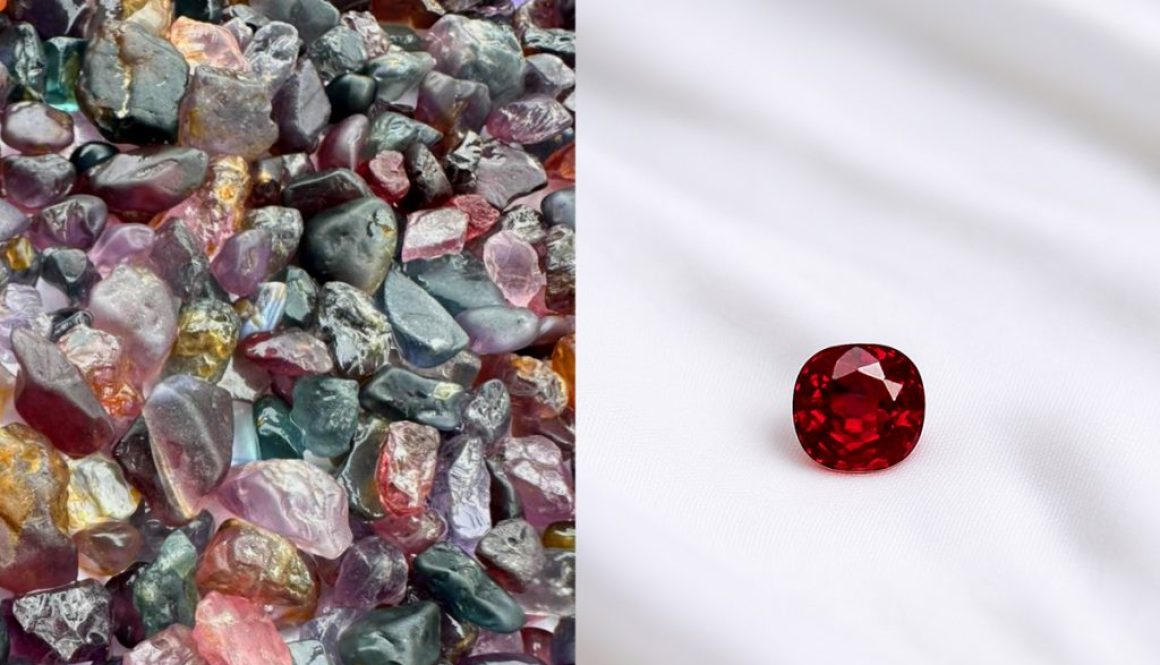
One of the most fascinated thing about spinel is its variety of hues like paint box from heaven. The most prized color is vivid red which is caused by chromium, the same color element makes ruby red. But you can find spinels in Blue, Lavender, pink, white, green, orange and even in black. Also I have seen so many spinel with star asterism. Cobalt blue is one of another highly prized variety of spinel.
Spinel has 1.71 to 1.73 refractive index, which gives spinel a brilliant sparkle look like diamonds. Also it stays in 8 score in Mohs hardness scale and that’s why it is a solid option for jewelries.
Precisely, the impurities lead to the colour of spinels by absorbing and reflecting light. it has a reflective index (measure of how much it bends light) around 1.71 to 1.73 that gives it an excellent sparkle almost like a diamond. Spinel is scores a solid 8 in the Mohs hardness scale which rates gems from 1 (soft like talc) to 10 (diamond-tough, making it durable enough for everyday wear, like in pendants, rings, earrings etc. so it won’t get scratches.
If you are a beginner in the gem industry it’s better to start with a blue or red spinel as it’s striking and versatile. The prices differ but a good quality 1 carat spinel cost around $500 to $5,000, depending on color or clarity which is less than an equivalent ruby.
Where does Spinels come from?
Spinals are normally found in coluntries like Myanmar, Sri Lanka, Tanzania, Vietnam and even Afghanistan. In Myanmar the mogok valley is well known for making the finest “pigeon’s blood” red spinels, A ruby-inspired crimson, deep and luminous.
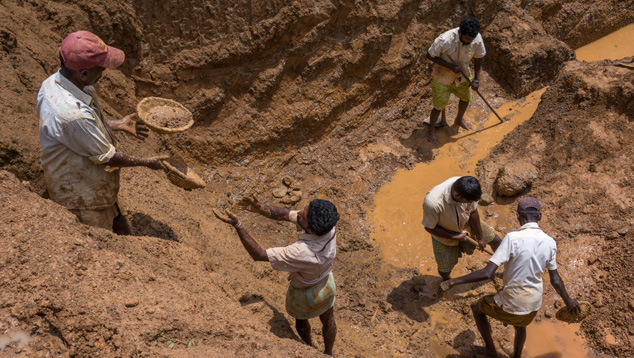
Spinel mining can be a challenging task, with stones usually taken from river sediments or hand-dug channels by small and medium size miners. In the recent years ethical sourcing has been valued everywhere, buyers are encouraged to choose gems certified by bodies such as the Responsible Jewellery Council, which helps ensure they are conflict-free.
Practical Details of Spinel: The brainy Side.
So first of all without overwhelming you, let’s get into bit more details about spinels. Spinel has a precise gravity of about 3.6 which means its denser than many other gemstones. For example if you pick one up, it would fell substantial. You might also spot inclusions tiny crystals or fluid-filled cracks which are called “fingerprints” that helps to identify the gem.
Gemologists differentiate spinel from similar stones using apparatuses such as refract meters to measure refractive index and spectroscopes to analyze absorption patterns. For example, Red spinel is marked by strong chromium lines but generally lacks the UV fluorescence seen in certain rubies. When you are buying it’s more convenient to ask for a lab report from places like GIA to verify its authenticity.
Maintenance for Your Spinel
Spinel works exquisitely across all types of jewelry, from necklaces to bracelets to rings and beyond. It’s also very suitable for engagement rings due to its hardness and also its uniqueness. While pairing red spinel with diamonds feels old-style and blue spinel in white gold feels definitely contemporary.
Maintaining a spinel gemstone is not very complicated or hard. Avoid using harsh chemicals to clean, only you need to clean it with lukewarm water and little bit of soap with a soft brush. That helps you to keep the gemstones authenticity. And also store it separately to prevent cuts from solider gems like sapphires or diamonds.
Spinel is perfect for beginners. Here is the reason
Spinel is a perfect pick if you are just starting your gem journey, as it is beautiful, durable and affordable. Like the laid-back friend of the gem family with plenty of stories to tell to begin your journey. Whether you are buying your very first gem or searching a gemstone for a custom jewelry design, spinel will be a fantastic opportunity with no doubt.
Buying things online is not a new thing, we buy many things need to our day-to-day life online because of the convenience. Which saves time, fuel , money and also you have so many options to explore. You can see customer reviews, customer experience and can compare different products on your computer or mobile screen.
When it comes to purchasing gemstones online, things getting much complicated and risky. If you are not careful or act wisely then you will end up loosing money, time, gemstone or all of them. I have purchased so many gemstones online when I started my journey on the gem business. But after few months, I realized I was scammed, cheated or manipulated in so many ways. Below I will mention few points to secure your hard earned money as you go through this journey.
Why do we need to buy Gemstones online?
There are several ways to buy gemstones. You can buy a gemstone:
From your own mine
If you are living an area where gemstones are found, you can invest on mining for searching gemstones.
Buying directly from miners
Many small scale miners sell their daily or weekly findings as rough gemstone to meet the financial needs to cover expenses such as wages, fuel, rent , etc. So you can buy from them if you have in depth knowledge in rough gemstones.
Buying from gem markets
In mining areas there are markets to sell rough or polished gemstones. These markets are commenced on certain days of a week. Local miners and gem brokers present their gemstones here. you can bargain and most of time you can get a good price there. Again you need a good knowledge in rough gemstones.
Buying from Gem Shops
In mining areas and cities, there are gem shops. Normally they sell cut and polished gemstones. As there are established businesses, you might have more security there. Some shop offer gem testing and identification services. So you have a good possibility to get a genuine product.
Buying from Online Gem broker.
There are companies who do brokering on gemstones. When you need a special gemstone, you can hire those companies. For an example, suppose you need a 10 carat Royal Blue Gemstone in Rectangular shape and brilliant cut with GIA certification, then you can hire their service. That a good option to find a proper gemstones.
Buying from online platforms
This is the easiest way to find a good stone or a trouble. You can find gemstones on Ebay, Etsy, Amazon, Temu or in social media market places like Facebook, tiktok. The problem is these platforms are not specifically specialized in selling gemstone. They allow to sellers to post anything in a limited inspection structure.
Buying online from a Gem Dealer
Some individuals as well as companies sell gemstones on line on their specific channels like website, whatsapp or tiktok shops.
Though the Gem industry spread around the every country in the world, but the gemstones are not found in every where. Some gemstones are found in only few countries only. Even within a such country also there in only few specific places where the gemstones are found. In this case, the best option to find a gemstone is buy online.
Kinds of Online Scams
Below I will mention few online scams I experienced and lost my money. I hope with this insight you can identify distance trap before fall in to it.
Too low prices
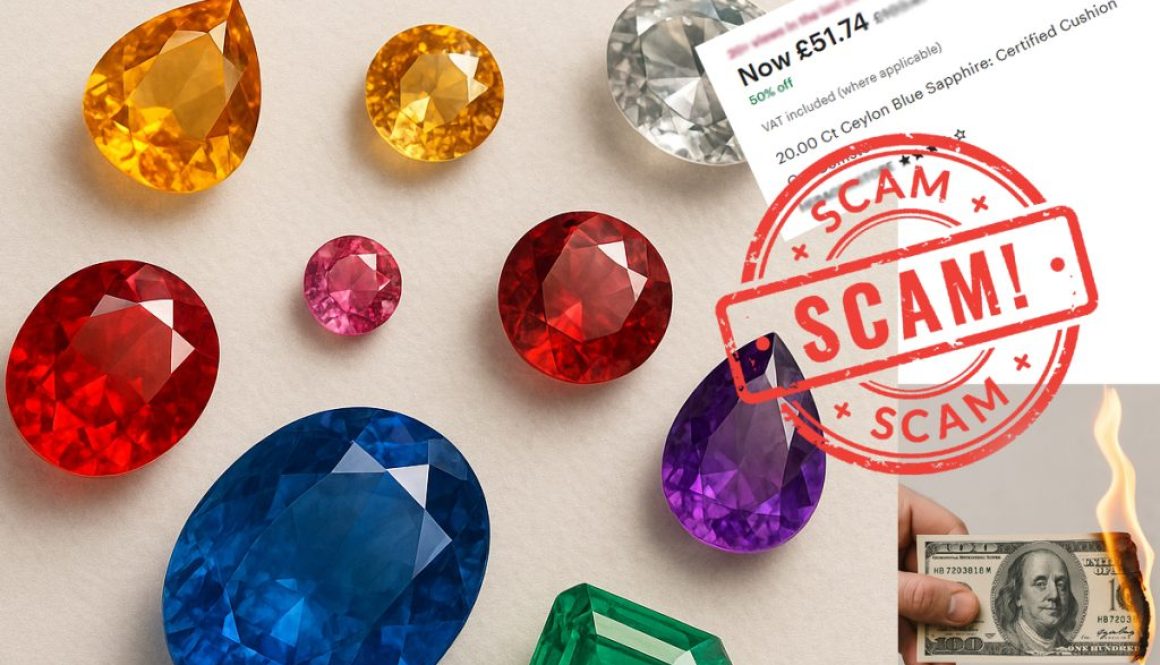
Every gemstone has a specific price. Sometimes when you search on platforms like Etsy, Temu, Ebay you will see insanely low prices on precious gemstones. Such as 4carat Royal Blue Sapphire for $20. There is no way these stones go that below. In the real market Investment grade 4carat Royal blue price is high as $4000 or more. These scammers use terms like “Natural”, “Certified”, “Ceylon” to mislead the customers. They know someone who is looking for such a stone for that low price, will never go for GIA certification spending another $95.
Avoid providing more information
Mostly those scammers don’t provide further information on a gemstone, but leaving the only option as “Buy Now”. I tried to contact 15 sellers on Etsy to verify the origin of the Stone they advertised, buy only 2 replied. If they are genuine sellers, they should have the ability to provide necessary information asked. Some of them only appeared in those platforms only. No physical location, address, website or any contact number.
Recently I ordered a gemstone from such platform for a low price to understand the scope of this scam. That seller has so many positive feedbacks. Some customers has posted their purchases with photos and very long lovely feedbacks. When I sent that gemstone to gem laboratory, the gemology report was “Laboratory-Grown Sapphire (Corundum)”
Fake Certification
Sometimes you see they have posted gemstones with certificates. Specially those certificates from gem labs even don’t have a website. Which means there is no way to check the authenticity. Some times certificate is genuine but gemstone is fake. Here is how they do such things. They have a real gemstone, specially one with renowned color such as “Padparadscha”. So they get cerificates from several local gem labs for same gem. Then they make exact same size and cut gemstones using Cubic Zirconia. When someone order a gem they send the real certificate with fake gem. When you get a gem with a certificate, you won’t bother to get another certificate. They know that.
No Return Policy
If there is no return policy, it is completely “No – No” situation. When you buy something online which is not sure, then always go for return policy.
Using Misleading Terms
After inspecting over 100 gemstone postings, I have noticed few term used by Scammers to mislead entry level gem enthusiast. Those are,
AAA / AAAAA / Premium grade
Wholesale price / factory direct / liquidation / urgent sale
Kashmir blue / Burmese / Ceylon / Madagascar
Certified
Natural/CZ
Investment grade / museum quality
How to avoid fall in to scams
Take time to verify the seller before gemstone
Try to contact directly by phone or email
Check them on trusted review platforms like trustpilot.com
Check the price if it is too good to be true
Always ask for a reputed certification and try to verify it
Ask for in person sale if there is an opportunity
Always ask for insured delivery method
Try to get live video viewing
Final thoughts : Always remember gemstones are not cheap. They hold values for generations. Natural gemstone is a rare piece of nature. So You can’t get them for unbelievable low price. Always try to get good stone for reasonable price.
Gemstones don’t just appear in the ground – they’re the end result of extreme heat, pressure, slow cooling, chemical reactions, and a lot of time. Here’s a clear look at how gems are formed, from deep inside the Earth to right near the surface.
A gemstone is usually a mineral (or sometimes non-crystalline material like amber or opal) that is:
Naturally occurring
Hard enough to survive wear
Chemically stable in normal conditions
Transparent or translucent (most of the time)
Attractive in colour, brilliance, or pattern
All gems are crystals or crystal-like structures at heart, shaped by the conditions in which they grow.
The Key Ingredients for Gem Formation
Almost all gemstones need some combination of:
Chemical building blocks Elements like carbon (C), aluminum (Al), silicon (Si), beryllium (Be), chromium (Cr), iron (Fe), and trace metals are the “alphabet” of gem chemistry.
Temperature and pressure
High pressure deep in the Earth helps form gems like diamond.
High temperature can melt rock, creating magmas and fluids where crystals grow.
Time Crystals need time to grow. Large, flawless crystals can take millions of years under stable conditions.
Fluids Hot, mineral-rich water moves through cracks in rock, dissolving elements and depositing them as gem crystals when conditions change.
Different combinations of these factors create different gem-forming environments.
1. Deep in the Mantle: Diamonds
Diamonds are a classic example of a gem formed deep within the Earth.
Starting material: Pure carbon
Conditions:
Depths of about 140–200 km in the mantle
Temperatures of roughly 900–1,300 °C
Enormous pressures (45–60 kilobars or more)
Under these conditions, carbon atoms are forced into a tight, three-dimensional lattice, forming diamond.
The diamonds don’t stay down there forever. They are brought toward the surface by explosive volcanic eruptions, traveling in pipe-shaped bodies of rock called kimberlites or lamproites. Once erosion wears away the surrounding rock, diamonds can end up concentrated in river gravels and coastal sands (called alluvial deposits).
2. Magma and Pegmatites: Beryl, Tourmaline & More
When rock melts into magma, it can cool and crystallize into igneous rocks. As this magma cools:
Common minerals (like quartz and feldspar) crystallize first.
Rare elements (like lithium, beryllium, boron) get concentrated in the leftover, water-rich melt.
This leftover melt can form pegmatites – extremely coarse-grained igneous rocks with giant crystals.
Pegmatites are treasure chests for gemstones. They can host:
Beryl (emerald, aquamarine, morganite, heliodor)
Tourmaline
Topaz
Spodumene (including kunzite)
Because pegmatites cool slowly and are rich in fluids, crystals have space and time to grow large and well-formed.
3. Metamorphic Rocks: Rubies, Sapphires, and Garnets
Metamorphism happens when existing rocks are changed by heat and pressure without fully melting.
When rocks containing aluminum, silica, and other elements are squeezed and heated in mountain-building zones, new minerals grow:
Corundum (aluminum oxide) forms in aluminum-rich rocks.
With chromium → ruby (red corundum)
With iron and titanium → blue sapphire
Other trace elements → pink, yellow, green sapphires
Garnets (a group of minerals) form in many metamorphic rocks, often during regional metamorphism (large-scale rock transformation).
Metamorphic gems often occur in:
Marbles (recrystallized limestone), where rubies and sapphires can grow
Schists and gneisses, where garnet, kyanite, and other gem minerals can form
4. Hydrothermal Veins: Emeralds and Quartz Varieties
Hydrothermal simply means “hot water.” Deep in the crust, water heated by magma:
Flows through fractures and cavities in rock
Dissolves metals and silica from surrounding rocks
Deposits them as minerals when it cools or reacts with different rocks
This process forms veins filled with crystals.
Common hydrothermal gemstones include:
Emerald – a green variety of beryl coloured by chromium or vanadium, often in veins cutting through black shales or limestones
Quartz and varieties like:
Amethyst (purple)
Citrine (yellow)
Smoky quartz
Fluorite
Topaz (sometimes)
These gems grow from solutions, often in open spaces like cavities and vugs, leading to beautifully shaped crystals.
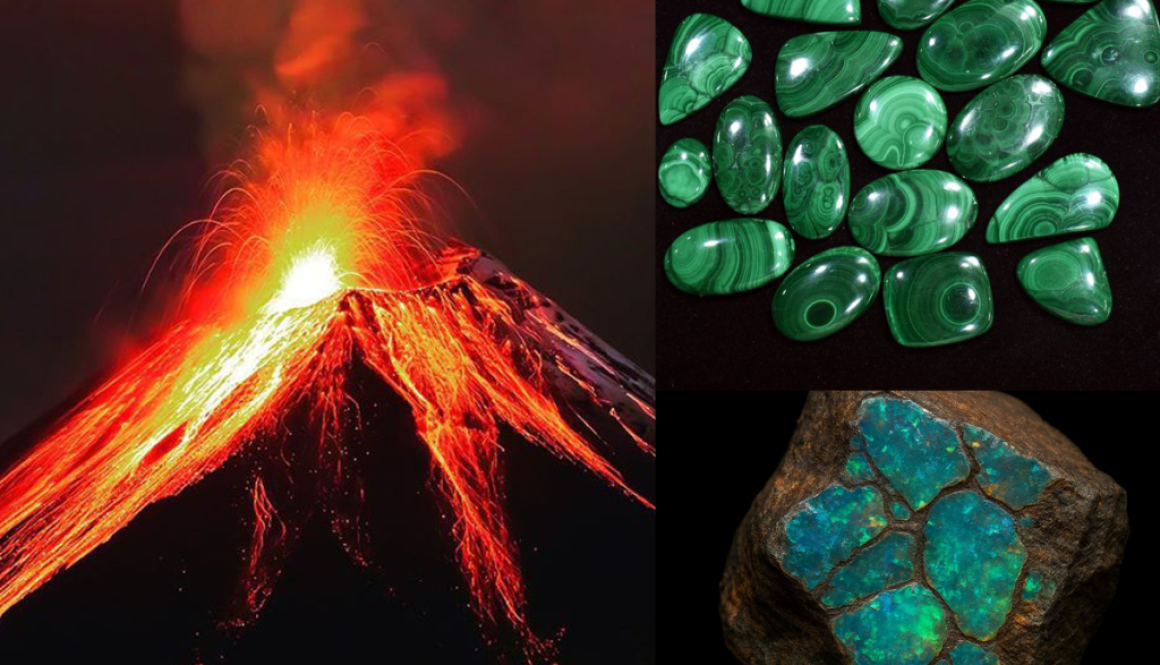
5. Sedimentary and Low-Temperature Gems: Opal, Turquoise & Others
Not all gems need extreme conditions. Some form at or near the Earth’s surface in sedimentary environments, where rocks are broken down and reformed.
Opal
Opal is not a crystalline mineral but a hydrated form of silica:
Silica-rich water seeps into cracks and cavities in rocks.
When the water evaporates, it leaves behind countless microscopic spheres of silica.
If the spheres are uniform and neatly packed, they diffract light, producing play-of-colour – this is precious opal.
Opal often forms in volcanic ash layers, sandstones, or ironstone.
Turquoise
Turquoise forms when:
Copper-rich waters react with aluminum and phosphate minerals
This happens in the weathered zones of copper deposits, often in dry, arid climates
The result is a blue to green, opaque gem filling cracks and veins or forming nodules.
Other sedimentary-related gems
Malachite and azurite – copper carbonates, forming in oxidized copper deposits
Zircon and peridot can be transported and concentrated in river and beach sands as placer deposits because they are dense and resistant to weathering.
6. Secondary Deposits: Nature’s Sorting System
Once gems form, they don’t necessarily stay where they started. Weathering and erosion break down rocks and free the crystals:
Rivers transport these loose gems.
Dense, hard minerals like diamonds, sapphires, spinels, garnets, and gold settle in bends of rivers, gravel bars, or along beaches.
These are alluvial or placer deposits, which are often easier to mine than hard rock.
This is why some gem fields are in riverbeds and ancient stream channels rather than in solid rock.
Why Gems Have Different Colours
Colour in gemstones mostly comes from:
Trace elements Tiny amounts of certain metals substitute into the crystal:
Chromium → red (ruby), green (emerald)
Iron and titanium → blue (sapphire)
Manganese → pinks and reds in some gems
Crystal defects and radiation Imperfections or exposure to natural radiation can create colour centers, especially in gems like smoky quartz or some topaz.
Physical structure In opal, colour comes not from chemistry but from the size and spacing of silica spheres that diffract light.
Natural vs. Synthetic Gems
Humans have learned to imitate nature’s conditions in labs:
Synthetic gems (like lab-grown diamond, ruby, sapphire, emerald) have the same chemical composition and crystal structure as natural ones but form much more quickly using high pressure, high temperature (HPHT) or chemical vapor deposition (CVD) and other methods.
They show that gem formation is just chemistry plus physics – but stretched over different timescales.
Natural gemstones, however, carry the history of Earth inside them: inclusions, growth lines, and subtle variations that reveal where and how they formed.
In Short
Gems are formed when:
The right elements are present
Under the right conditions of temperature, pressure, and fluids
For long enough for crystals to grow
Whether it’s carbon deep in the mantle becoming diamond, aluminum-rich rocks transforming into ruby and sapphire, or silica-rich waters leaving behind opal, every gemstone is a tiny record of the geological forces that shaped our planet.
If you’d like, I can now:
Turn this into a shorter, kid-friendly version
Expand a specific section (like diamonds or opals) into its own detailed article
Add simple diagrams you could sketch to explain these processes visually
Gemstones have captivated people for ages. They sparkle, shine, and carry stories from deep within the Earth. But when you admire a beautiful stone in a ring or pendant, you might wonder: Is this gem completely natural, or has it been treated to look this way?
One of the most common enhancement methods is heat treatment. In this guide, we’ll explain what a natural gemstone is, how heat treatment works, and how to recognize untreated stones—using clear, beginner-friendly language.
1. What Is a Natural Gemstone?
A natural gemstone is a mineral created entirely by nature, with no human influence on its formation. People may mine, cut, and polish it—but they haven’t changed its color or clarity with treatments.
Examples of natural gemstones:
A sapphire from Sri Lanka showing its original blue color
A ruby from Myanmar with its natural inclusions
An emerald from Colombia with unaltered clarity features
High-quality natural gems with strong color and good clarity are rare, which is why they tend to be more valuable than treated ones.
Interesting note: Many sapphires and rubies don’t naturally have the deep, vivid colors we see in jewelry displays. Those intense hues are often the result of treatment.
2. What Is Heat Treatment and Why Is It Used?
Heat treatment is one of the oldest and most widely accepted ways to enhance gemstones. It involves heating a stone to high temperatures—often between about 500 °C and 1,800 °C—to improve how it looks.
Why do jewelers heat gems?
To make the color stronger and more even
To reduce or remove visible inclusions
To increase transparency and brilliance
For example, a pale blue sapphire can turn into a rich royal blue after heating, and a ruby may appear clearer and brighter if silky inclusions are reduced by heat.
Organizations like the Gemological Institute of America (GIA) recognize heat treatment as standard practice, especially for corundum (the mineral family that includes sapphires and rubies).
Other Common Gemstone Treatments
Besides heat, several other methods may be used to enhance gems:
Fracture filling – Cracks are filled with glass or resin to improve clarity (often seen in emeralds).
Diffusion treatment – A gem is heated with chemicals so color elements diffuse into its surface, changing or intensifying its color.
Irradiation – Radiation is used to alter color, commonly in gems like topaz or some diamonds.
Oiling – Oil is applied to emeralds to make surface-reaching fractures less visible.
These treatments can make stones more attractive but may affect long-term value.
Very important: Any treatment should be disclosed when the stone is sold. Honest, reputable sellers are always transparent about enhancements.
3. How Can You Identify Untreated (Unheated) Gemstones?
Wondering whether a gemstone is untreated? Here are key clues.
A. Certification
The most reliable method is a report from a respected gemological laboratory, such as:
Gemological Institute of America (GIA)
GemResearch Swisslab (GRS)
American Gemological Laboratories (AGL)
These labs use advanced equipment to determine whether a stone has been heated or otherwise treated.
B. Inclusions
Natural, unheated gems often contain inclusions that formed as the stone grew—like tiny “birthmarks.”
Examples:
Silk inclusions in sapphires: fine rutile needles that create a soft, hazy effect.
“Fingerprints”: patterns formed by fluids trapped inside the gemstone.
If these delicate inclusions are still sharp and undisturbed, it’s a strong sign the stone has not been heat treated.
C. Color Zoning
Untreated gems may show uneven color or visible zones. Treated stones usually display more uniform, even color.
D. UV Fluorescence
Some natural, untreated stones react to ultraviolet light in characteristic ways. Gemologists use UV lamps as part of their testing toolkit.
E. Price Signals
If a gem looks flawless, intensely colored, and is very cheap, it’s likely treated—or possibly synthetic. Naturally perfect stones with great color and clarity are rare and cost accordingly.
F. Ask Questions
Always ask the seller:
Has this stone been treated?
Is there an independent lab report?
If they can’t provide clear answers or documentation, proceed with caution.
4. Do Heat-Treated Gemstones Have Less Value?
The answer is: it depends.
Heat-treated stones are still genuine gemstones. They’ve simply been enhanced to look their best, and many people are perfectly happy wearing them every day. However, from a collector or investor’s point of view, untreated natural stones usually sit at the top of the value ladder.
Example:
A heated sapphire of good quality might be worth around $1,000.
A very similar sapphire with no heat treatment might sell for $5,000 or more.
Collectors pay a premium because untreated gems are rarer and completely natural.
5. Why This Matters for You
Whether you’re shopping for:
A special piece of jewelry
A gift with meaning
A gemstone investment
…understanding treatments helps you choose wisely.
If you value natural rarity and purity, look for untreated stones.
If you want beauty at a more attainable price, heat-treated gems are often a fantastic choice.
In all cases, ask for certificates when possible and buy from trustworthy sellers.
6. Real-World Case: Sri Lankan Sapphires
Sri Lanka is world-famous for its sapphires. Many stones from this country are heat treated to bring out vivid blues and cleaner appearances. These gems can be stunning and are widely traded.
However, truly unheated Sri Lankan sapphires are much rarer and can command very high prices. Gemological studies, including those by GIA and other laboratories, have highlighted that some Sri Lankan sapphires rank among the finest in the world for clarity and color—especially when left untreated.
7. Final Thoughts: Treated vs. Untreated—Your Gem, Your Choice
Learning about gemstone treatments doesn’t mean you must avoid treated stones. Instead, it empowers you to choose what matters most to you.
Think of it like buying fruit at the market: some apples are polished or waxed to look shinier, but they’re still real apples. With gemstones, you simply decide whether you prefer:
The rarity and natural story of untreated stones
The enhanced beauty and affordability of treated ones
Or a balance of both
Either way, gemstones are remarkable pieces of Earth’s history and artistry. Now that you understand the basics of heat treatment and natural gems, you’re better prepared to appreciate and choose them with confidence.
Further Reading :
Gemological Institute of America (GIA) – resources on gem treatments
International Gem Society – gemstone treatment guides
General articles on gemstone treatment and history
GemResearch Swisslab (GRS) publications
Stay tuned to Gemguidebook.com for more beginner-friendly gemstone guides and stories from the world of gemology!
Welcome to Gemguidebook.com! If you’re just starting to explore the world of sapphires and want to buy one with confidence, this guide is for you. We’ll walk you through the basics—from sapphire types and color quality to treatments, pricing, and where to shop—so you can make a beautiful, informed, and lasting purchase.
Why Sapphires Make Excellent Long-Term Purchases
Fine sapphires, especially top-quality stones, are prized both as luxury jewelry and as potential long-term assets. Blue sapphires from Sri Lanka (Ceylon), Kashmir, and Burma (Myanmar) are especially sought after and can rise in value over time, particularly if they’re completely untreated.
Sapphires combine several advantages:
Rarity & Beauty: High-quality stones are limited in supply and visually striking.
Durability: As the second hardest natural gemstone after diamond, sapphires are ideal for daily wear.
Timeless Style: Classic sapphire jewelry doesn’t go out of fashion and can be passed down as an heirloom.
Fun fact: The famous 12-carat blue sapphire in Princess Diana’s engagement ring—now worn by Catherine, Princess of Wales—dramatically boosted global interest and demand for sapphires.
The Main Types of Sapphires
Sapphires are far more diverse than just blue. Here are the key categories:
Blue Sapphire The iconic sapphire. The most coveted stones often come from Sri Lanka, Kashmir, and Burma.
Padparadscha Sapphire A rare and highly prized pinkish-orange variety, most commonly associated with Sri Lanka.
Fancy-Colored Sapphires These include pink, yellow, green, and purple sapphires and are gaining popularity among modern buyers.
Star Sapphire Contains fine needle-like inclusions that create a star-shaped pattern (asterism) across the surface when viewed under a direct light.
Color-Change Sapphire These shift color depending on the light—typically appearing blue in daylight and purplish under incandescent lighting.
Some buyers specialize in a single type (for example, only padparadscha), while others build collections with a wide range of colors and effects.
Understanding Sapphire Color: Hue, Tone, and Saturation
Color is the most important value factor in sapphires. Professionals often break color into three components:
Hue: The basic body color (e.g., blue, pink, yellow).
Tone: How light or dark the color appears.
Saturation: How intense or vivid the color is.
For blue sapphires, the most desirable color is a rich, vivid royal blue—neither too dark and inky nor too pale and washed out. Stones that are overly dark or too light are generally less valuable.
Quick tip: View the sapphire in different lighting conditions. Morning daylight is especially useful for seeing the stone’s most accurate color.
Cut and Shape: Not Just About Style
While diamonds follow strict cut grading systems, sapphires don’t have a universal cut grade. However, cut still plays a huge role in how a sapphire looks:
A well-cut sapphire will show even color, good brightness, and attractive sparkle from various angles.
A poorly cut stone might look dull, overly dark, or patchy in color, even if the rough material was high quality.
Popular shapes include:
Oval (very common for sapphires)
Cushion
Round
Pear
Emerald cut
Fun fact: Sapphire cutters often work with the natural shape of the rough stone, trying to keep as much weight as possible while still getting strong color and brilliance.
Heated vs. Unheated Sapphires
Most sapphires on the market are heat-treated to improve color and clarity. This is a standard, stable, and generally accepted practice in the gemstone industry.
However, unheated (untreated) sapphires are much rarer and usually more expensive.
Why Unheated Sapphires Cost More
Rarity: Only a small fraction of sapphires reach the market without any heat treatment.
Collector Appeal: Serious collectors often prioritize untreated stones.
Natural Origin: Many buyers appreciate a gemstone that has not been enhanced by humans.
When shopping, always ask for a respected laboratory report that clearly states whether the stone has been heated or is untreated.
How Sapphires Are Valued (Plus Sizing Suggestions)
Gem professionals often consider the following when assessing value:
Color: Strong, vivid, and appealing colors command the highest prices.
Clarity: While some inclusions are expected, fewer and less visible inclusions are preferable.
Cut: A good cut shows off the stone’s brightness and color evenly.
Carat Weight: Larger sapphires are much rarer and prices climb steeply with size.
Origin: Stones from renowned locations like Kashmir, Burma, and Sri Lanka often sell at a premium.
Practical Sizing Tips
Rings: Around 1–3 carats is a comfortable and elegant size for everyday wear.
Earrings: Approximately 0.5–2 carats per ear is typical, depending on the design and style.
Pendants: Often range from 1–4 carats, with larger stones making more of a statement.
Where You Can Buy Sapphires
There are several options, each with pros and cons:
1. Buying Near the Source
Traveling to gem-producing regions—such as Ratnapura in Sri Lanka—can be exciting and may offer competitive prices. However, this approach requires experience and, ideally, a trusted local expert to avoid costly mistakes.
2. Open Gem Markets
Famous gem markets include places like Beruwala in Sri Lanka or Chanthaburi in Thailand. These can be excellent for variety and price, but you’ll need strong negotiation skills and a solid eye for quality.
3. Local Gem Dealers
Working with a reputable, certified local dealer who provides gemstone reports is often one of the safest paths. Over time, building a relationship with a trusted expert can lead to better selections and fair pricing.
4. Auctions
High-end auction houses sometimes offer exceptional, collectible sapphires. These pieces are usually rare and aimed at buyers looking for something truly special—often at premium prices.
5. Jewelry Stores
Established jewelry shops provide convenience, after-sales service, and clear return or exchange policies. Many offer ready-made sapphire jewelry as well as loose stones, often accompanied by gemstone reports.
6. Online Retailers
Online shopping can provide access to a wide inventory. Look for sites that offer:
Clear, high-quality photos and videos
Transparent descriptions and treatment disclosure
Independent lab reports
Reasonable return policies
Important Precautions When Buying a Sapphire
To protect yourself and your investment, keep these points in mind:
Ask for a Gem Report: Obtain documentation from a respected gemological laboratory whenever possible.
Review Return Policies: This is especially important when buying online or overseas.
Choose Reputable Sellers: Work with trustworthy jewelers and dealers with solid reputations.
Watch for Synthetic Sapphires: Lab-grown sapphires can look similar to natural ones but usually have relatively low resale value. They should always be clearly disclosed as synthetic.
Confirm Treatments: Make sure any heating or other treatments are fully and honestly explained.
Set a Realistic Budget: Sapphires can range from relatively affordable to extremely costly. Decide in advance how much you’re comfortable spending.
Use Your Own Eyes: Compare several stones side by side in good natural light. Choose the one that visually appeals to you the most—not just what looks best on paper.
Final Thoughts
Buying a sapphire is both an emotional and practical decision. Whether you’re choosing a romantic gift, treating yourself, or looking for a stone with long-term value, a bit of knowledge goes a long way.
Take your time, learn the basics of color, cut, clarity, and treatment, and whenever possible, seek guidance from qualified experts. With the right information and a trusted seller, you can enjoy the sparkle, depth, and beauty of one of Earth’s most enduring gemstones—today and for generations to come.
When it comes to gemstones, one of the first things you hear about is the “4C’s.” But what exactly are the 4C’s, and how do they affect the value of a gem? In this article, we’ll break down the 4C’s in a simple, easy-to-understand way. Whether you’re new to gemology or just curious about how gemstones are evaluated, this guide will give you all the essential information you need!
What Are the 4C’s of a Gem?
The 4C’s are the four key factors used to evaluate the quality and value of a gemstone. These include Cut, Color, Clarity, and Carat Weight. Think of the 4C’s as the “ingredients” that determine how a gemstone looks, how rare it is, and how much it’s worth. Each factor plays a role in its overall beauty and desirability.
Cut
Colour
Clarity
Carat Weight
Let’s explore each of these in detail.
Cut – The Shape and Facets of a Gemstone
When you hear people talking about a gemstone’s “cut,” they’re not talking about its shape (like round or square). Instead, the “cut” refers to how well the gemstone has been shaped and faceted to maximize its brilliance, sparkle, and overall visual appeal. A well-cut gem reflects light beautifully, while a poorly cut gem may appear dull or lifeless.
How Cut Affects the Value
The cut is often considered the most important of the 4C’s because it directly influences how the gem sparkles and catches the light. A well-cut gemstone will shine brightly, while a poorly cut one can appear flat, even if it has the best color or clarity.
For example, diamonds are cut into specific shapes, such as round brilliant, princess, or oval, to maximize the way light interacts with the stone. A diamond with an excellent cut will shine with intense brilliance, adding significantly to its value.
Color – The Hue of the Gemstone
Color is one of the most important characteristics that people look for when choosing a gemstone. For most gemstones, the richer and more vivid the color, the more valuable the stone. But the color of a gem isn’t just about how bright or dark it is – it’s also about its hue, tone, and saturation.
How Color Affects the Value
Gemstones come in a wide range of colors, from the fiery red of a ruby to the vibrant green of an emerald. But not all colors are equal when it comes to value. For instance, in diamonds, a completely colorless diamond is considered the most valuable, while diamonds with noticeable yellow or brownish tints are less valuable. Similarly, sapphires that are rich blue in color tend to be the most highly prized.
Color Factors to Consider:
Hue: The actual color of the gemstone (e.g., red, blue, green, yellow).
Tone: The lightness or darkness of the color.
Saturation: The intensity or strength of the color.
An example: The most valuable rubies are those that have a deep, vibrant red hue, often called “pigeon’s blood” red, while lighter or more orangey red rubies are considered less valuable.
Clarity – The Presence of Inclusions or Blemishes
Clarity refers to the presence of any inclusions (internal flaws) or blemishes (external flaws) within or on the surface of a gemstone. When a gem forms in the Earth, natural elements such as gas bubbles, minerals, or other crystals can become trapped inside the stone, creating inclusions. External blemishes, like scratches or nicks, can also affect a gemstone’s clarity.
How Clarity Affects the Value
In general, the fewer inclusions and blemishes a gemstone has, the more valuable it is. However, not all inclusions are visible to the naked eye, so gemologists use magnification tools to inspect gemstones more closely. Some inclusions may even add character or uniqueness to a gem.
For example, in diamonds, stones with no visible inclusions or blemishes under 10x magnification are considered “flawless” and are extremely rare and valuable. A diamond with visible inclusions, such as a cloudy spot or a crack, will be worth significantly less than a flawless one. However, a gemstone like jade or emerald may have inclusions that are considered acceptable and even desirable, as they don’t detract from its value.
Carat Weight – How Heavy is the Gemstone?
Carat weight measures how much a gemstone weighs, not its size. One carat is equivalent to 200 milligrams, but because gemstones come in various shapes and cuts, two stones with the same carat weight can have different sizes. Larger gemstones are generally rarer and more valuable, especially if they are of high quality in all the other 4C’s.
How Carat Weight Affects the Value
Carat weight plays a big role in the price of a gemstone. Generally speaking, the more carats a gemstone has, the higher its price. However, two gemstones of the same carat weight can have vastly different prices depending on their cut, color, and clarity. For example, a 2-carat diamond with excellent cut, color, and clarity could cost much more than a 2-carat diamond with poor quality in those areas.
Example:
A 1-carat ruby with vibrant red color and excellent clarity can cost significantly more than a 1-carat ruby that is lighter in color or has visible inclusions.
How the 4C’s Affect the Value of a Gem
Now that we know what the 4C’s are, let’s discuss how each one influences a gem’s overall value.
Cut: A well-cut gemstone increases its brilliance and sparkle, making it more attractive. A poorly cut gemstone loses its potential to shine and is worth less.
Color: A gemstone’s color is one of the most important factors in determining its value. The richer and more vivid the color, the more valuable the gem. For diamonds, colorless stones are the most valuable.
Clarity: The fewer the inclusions and blemishes, the higher the value. However, clarity doesn’t always mean perfection – some gemstones, like emeralds, may be valued despite having visible inclusions.
Carat Weight: Larger gemstones are generally more expensive, but a gem’s size should be considered in conjunction with its cut, color, and clarity.
Conclusion: Understanding the 4C’s of a Gem
The 4C’s – Cut, Color, Clarity, and Carat Weight – are the four most important factors in determining the quality and value of a gemstone. Each factor plays a critical role in how a gemstone is evaluated, and together they help determine how much a gemstone is worth. Whether you’re buying a diamond, a ruby, or an emerald, understanding the 4C’s can help you make an informed decision about your purchase.
Remember, the 4C’s are not just about numbers or technicalities – they are about what makes a gemstone truly beautiful and unique. By learning about these factors, you’ll not only be able to understand gemstone value better, but you’ll also gain an appreciation for the natural beauty of the gems that catch your eye.